Dog Diabetes: Early Signs, Care, and Long-Term Health

November is Pet Diabetes Month, Nov is Pet Diabetes Month, a whole month dedicated to raising awareness about a chronic illness that is far more common in dogs than many caregivers realize. The key, as with humans, is early detection and effective management. With timely care, most diabetic dogs can live full, healthy lives.
What matters most is catching the condition before it harms vital organs.
What Dog Diabetes Is
Dog diabetes is a lifelong condition where the body can’t properly produce or use insulin, the hormone that controls blood sugar. There are two main types:
- Type I (insulin-dependent): the pancreas produces little or no insulin. This is the most common form in dogs.
- Type II (insulin-resistant): cells fail to respond to insulin appropriately, more often seen in overweight pets or those with hormonal disorders
Without insulin regulation, glucose builds up in the bloodstream instead of fueling the body’s cells, leading to systemic strain and organ damage over time.
Why It Matters
Diabetes affects an estimated 1 in 300 adult dogs in the U.S., and rates are increasing each year. While advances in insulin therapy and nutrition have improved outcomes, early detection remains key.
Uncontrolled blood sugar can damage blood vessels and organs, shorten lifespan, and diminish quality of life. When caught early and managed consistently, most diabetic dogs live nearly normal lifespans with excellent comfort.
Causes and Risk Factors
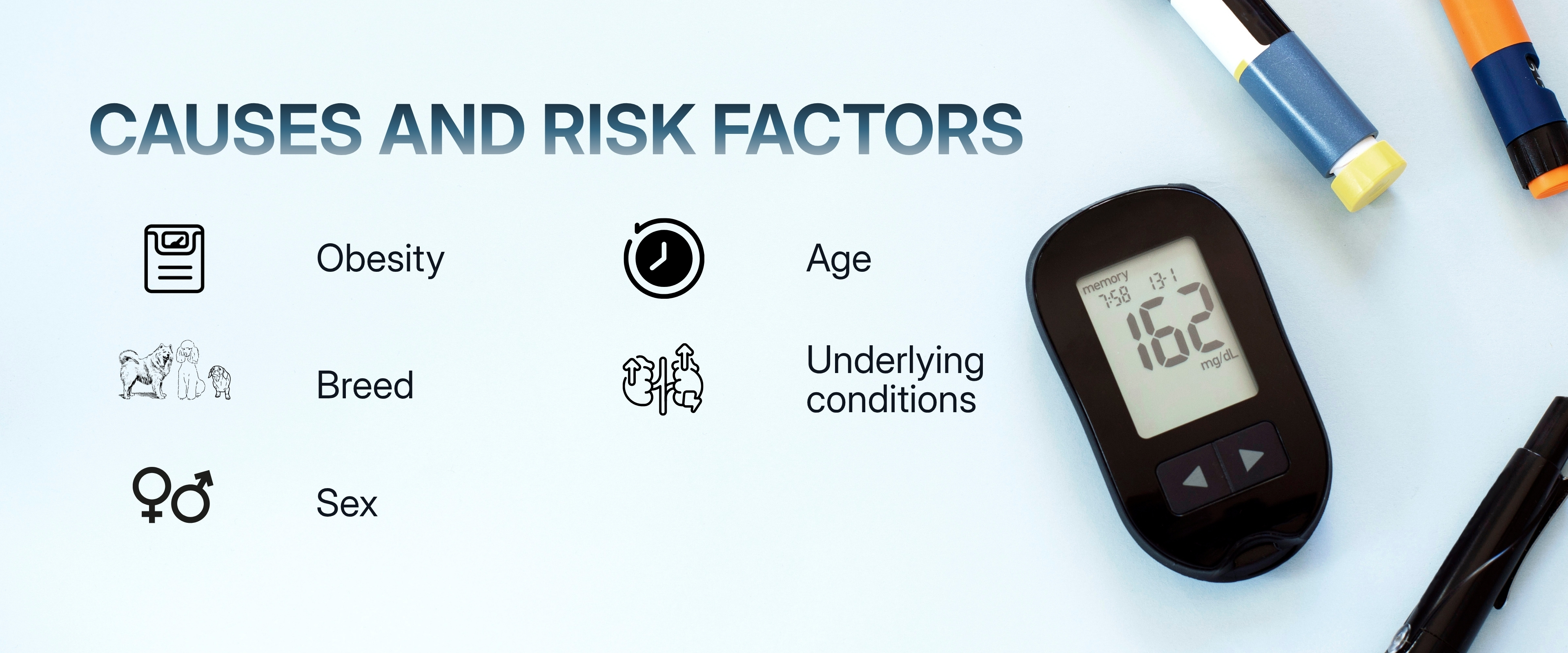
Several factors raise a dog’s diabetes risk:
- Obesity: extra body fat contributes to insulin resistance.
- Breed: Samoyeds, Miniature Schnauzers, Poodles, and Dachshunds have a higher genetic risk.
- Sex: unspayed females are at greater risk due to hormonal fluctuations.
- Age: most diagnoses occur between ages 7 and 10.
- Underlying conditions: pancreatitis, Cushing’s disease, or long-term steroid use can disrupt insulin function
Symptoms and Early Warning Signs
Dogs often hide discomfort, so small changes can be easy to miss. Typical early signs include:
- Increased thirst and urination
- Unexplained weight loss despite normal appetite
- Cloudy eyes or sudden vision changes
- Fatigue or reduced activity
- Sweet or “fruity” breath odor
Because dogs instinctively mask discomfort, even subtle shifts in drinking or appetite can signal internal change.
Diagnosis and Treatment Options
Diagnosis typically involves blood and urine tests to check glucose levels and rule out other diseases. Once confirmed, treatment focuses on insulin therapy, nutritional balance, and routine monitoring.
- Insulin injections: the cornerstone of management; most dogs need twice-daily doses.
- Diet: high-fiber, moderate-carbohydrate meals to stabilize glucose swings.
- Monitoring: regular glucose curves or continuous glucose monitoring under veterinary supervision.
- Exercise: consistent, moderate activity supports insulin efficiency and weight control.
Your vet may adjust dosage and diet over time as your dog’s metabolism changes.
Age of Onset
- Middle-aged to Senior Dogs: Most diagnoses occur between 5 and 12 years of age. These cases typically resemble Type I (insulin-dependent) diabetes, caused by reduced insulin production. Lifelong insulin therapy is needed, but with consistent care, most dogs live normal, healthy lifespans.
- Juvenile-Onset Diabetes: Rare in dogs under one year old and often linked to genetic or congenital pancreatic issues. Early stabilization supports normal development and long-term health.
- Diestrus-Associated Diabetes: Unspayed females may develop temporary diabetes during diestrus, when reproductive hormones interfere with insulin. If detected early and followed by spaying, it can be resolved. Prolonged exposure, however, may cause lasting pancreatic damage.
Duration of Disease
- Early Management: With timely diagnosis and stable glucose control, diabetic dogs can live for many years with a good quality of life. Regular insulin, diet consistency, and vet monitoring form the foundation of success.
- Long-Term Effects: Poorly controlled diabetes can cause serious complications, including: Cataracts: occur in over 85% of diabetic dogs, often progressing quickly to blindness, Diabetic ketoacidosis (DKA): a dangerous condition where the body breaks down fat for energy, acidifying the blood, Neuropathy, liver disease, and infections: persistent high glucose levels weaken organs and the immune system.
- Prognosis: Dogs receiving consistent insulin and care have excellent long-term outcomes, often living as long and comfortably as their non-diabetic peers.
Why Prevention Matters
While not all cases can be prevented, early detection and weight management make a profound difference. Keeping your dog fit, feeding balanced meals on schedule, spaying when recommended, and scheduling annual blood tests after age seven all reduce risk.
Even small changes in drinking, appetite, or energy can be early signals. Tracking these patterns helps catch issues before they escalate, giving your vet a clearer picture and your dog a safer path forward.
Practical Takeaways
- Watch for persistent thirst, changes in appetite, or cloudy eyes.
- Keep your dog at a healthy weight and feed balanced, timed meals.
- Follow insulin schedules exactly as prescribed.
- Visit your vet every 3–6 months for glucose and organ checks.
- Ask about at-home glucose monitoring tools for daily insights.
- Maintain calm routines; stress can affect glucose stability.
Final Thoughts
Dog diabetes doesn’t define your pet; it simply requires your awareness. With early intervention and steady routines, most diabetic dogs live whole, joyful lives.
At Hoomanely, we believe proactive care begins with understanding your dog’s everyday signals; how they eat, drink, and rest. When you listen early, you protect their future health, one quiet signal at a time.