Why Does My Dog Eat So Fast? Risks & How to Slow Down Eating
Dogs may eat very quickly because of food competition, learned habits, high food motivation, past scarcity, or an underlying condition that is making them unusually hungry. A suddenly swollen or painful abdomen, repeated attempts to vomit without bringing anything up, pale gums, weakness, or collapse can signal gastric dilatation-volvulus (GDV) and requires immediate emergency veterinary care. Cornell describes GDV as a life-threatening condition that needs prompt medical and surgical treatment.
For a dog that otherwise appears well, start by making the meal harder to gulp: feed away from other pets, divide the normal daily ration into smaller meals when appropriate, or use a properly sized slow feeder or food puzzle. If the behavior is new or comes with unusual hunger, weight loss, excessive drinking, vomiting, diarrhea, or another change, look beyond the bowl and speak with your veterinarian.
The Short Version
- Fast eating often has more than one driver. Competition, learned food urgency, high food motivation, and unusually increased appetite can all contribute.
- GDV is the most serious concern, but fast eating is a risk factor rather than the sole cause. Cornell lists rapid eating among recognized GDV risk factors, and a prospective study by Glickman et al. in 1,637 large and giant-breed dogs found an association between faster eating and greater GDV risk.
- Slow feeders, food puzzles, smaller meals, and separate feeding areas can make meals more controlled. VCA and AAHA recommend several of these approaches for dogs that gulp food.
- A sudden increase in hunger deserves attention. Diabetes, Cushing's disease, intestinal parasites, malabsorption and some medications can increase appetite, particularly when other symptoms appear.
Why Do Dogs Eat So Fast?
Most dogs that finish a meal almost immediately are not being deliberately greedy. Food may feel competitive, highly rewarding, or simply worth securing as quickly as possible.
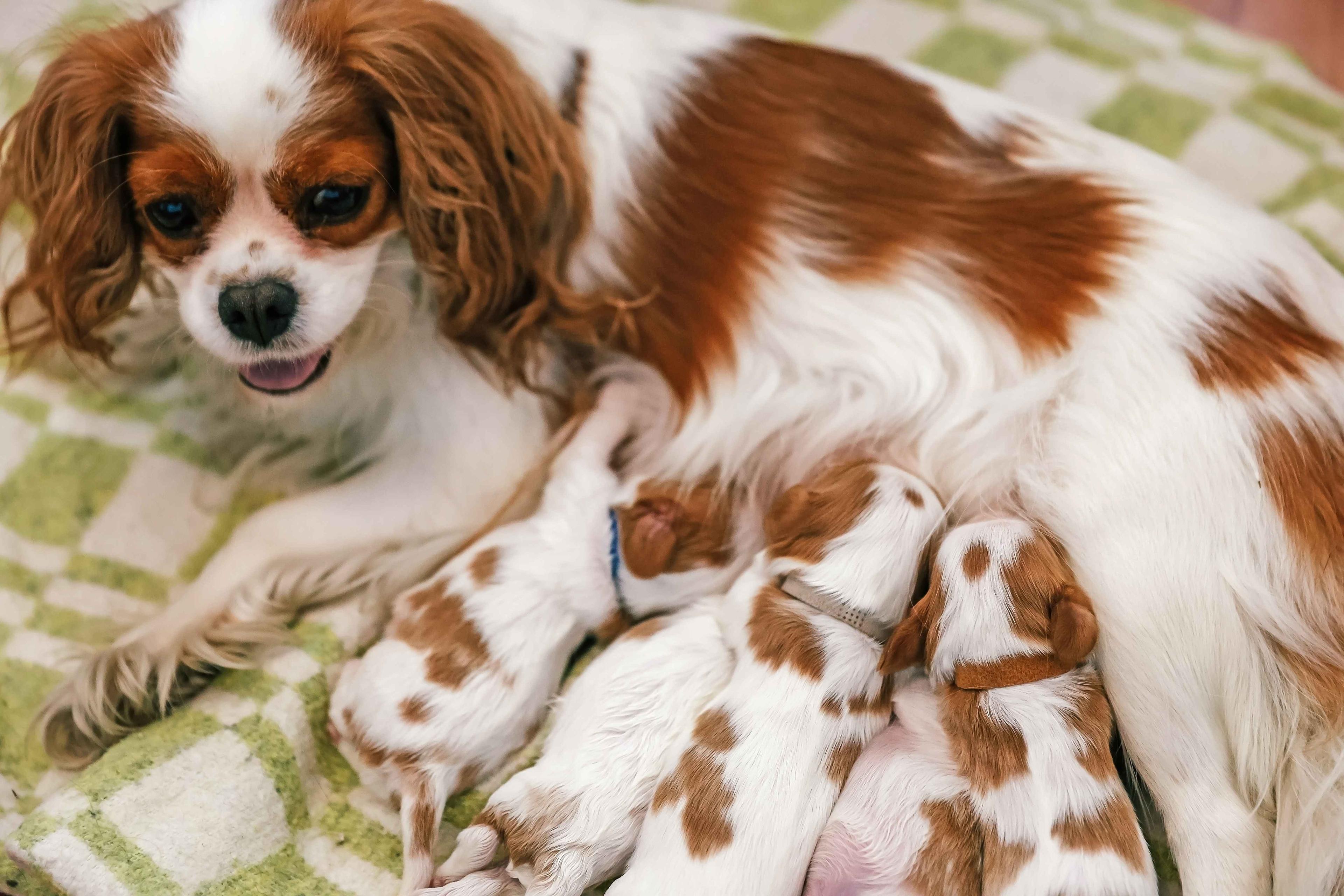
In multi-pet homes, another dog standing nearby can be enough to increase urgency. Some dogs also carry learned behavior from earlier environments where food was less predictable or had to be shared. Hill's notes that competition with other pets or littermates can contribute to rapid eating.
Start with the simplest question: Does your dog eat differently when completely alone? If the answer is yes, reduce visual and physical competition first. If the dog remains unusually ravenous regardless of the setup, especially if this is a new change, look for medical clues rather than assuming it is only a habit.
What Causes Fast Eating in Dogs?
The useful distinction is between a dog that has always been enthusiastic about food and one whose appetite or meal behavior has changed.
Some dogs are naturally highly food-motivated, while learned food urgency and competition can make that behavior more pronounced. Household competition and learned food urgency usually provide more useful clues. Purina discusses both competition and canine taste biology as possible contributors.
Nutrition and health matter too. VCA notes that increased appetite can occur when food does not adequately meet energy needs, but it can also accompany intestinal parasites, diabetes mellitus, gastrointestinal malabsorption, exocrine pancreatic insufficiency, Cushing's disease, and corticosteroid medication.
Watch more closely if fast eating appears with:
- weight loss despite a strong appetite
- increased thirst or urination
- vomiting or diarrhea
- a pot-bellied appearance or new panting
- poor coat or skin changes
- persistently abnormal stool
- a sudden change from your dog's normal appetite
Diabetes commonly causes increased appetite together with increased thirst, increased urination, and weight loss. Cushing's disease can cause increased appetite, thirst and urination, panting, muscle loss, and abdominal enlargement.
For more context, see Hoomanely's guide to early signs of canine diabetes and its overview of parasite prevention in dogs.
Is Fast Eating Dangerous for Dogs?
It can be. When a dog eats too fast, the risk depends on the dog, how the food is swallowed, and whether other GDV risk factors are present.
VCA notes that dogs that gulp meals can develop problems including regurgitation, aspiration, vomiting, and bloat. One useful distinction is regurgitation versus vomiting. Regurgitation is usually passive, with food coming back up from the esophagus without the abdominal effort typical of vomiting. Repeated episodes of either deserve veterinary assessment.
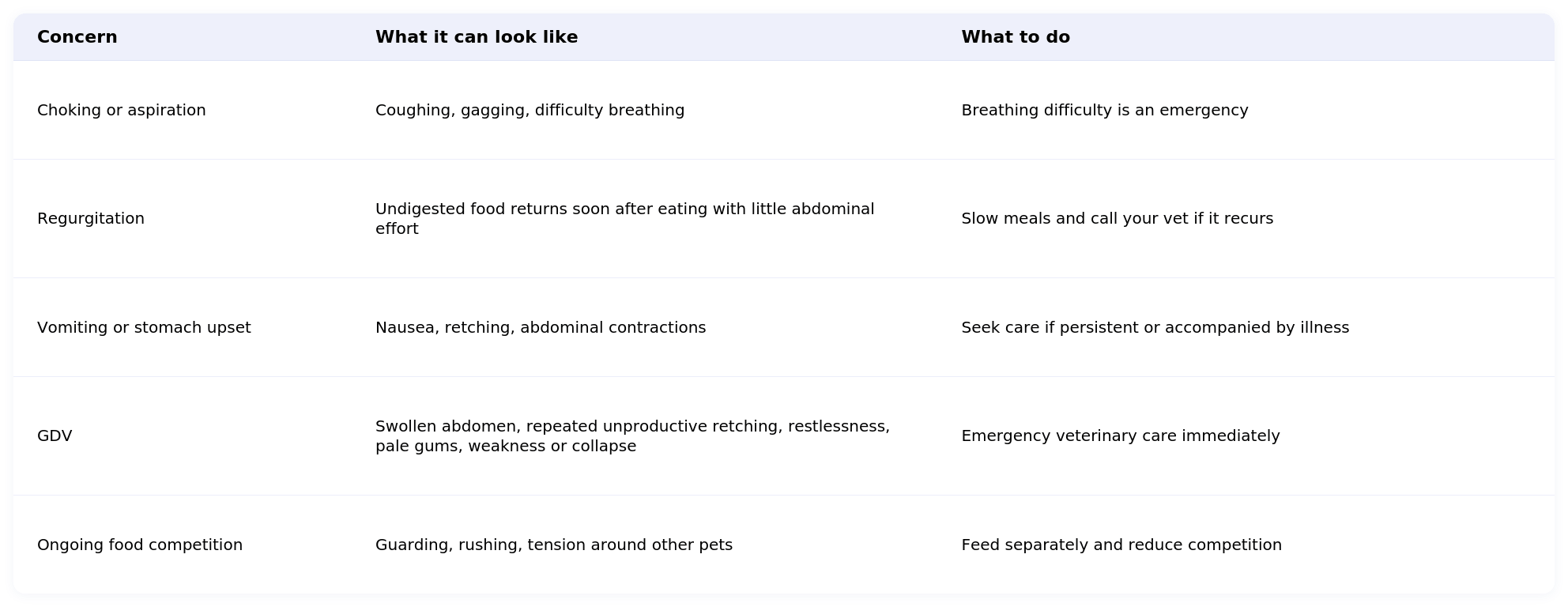
Hoomanely’s guide to bloat and GDV in dogs explains the emergency signs and broader risk factors in more detail. Glickman et al., in a prospective study of 1,637 large and giant-breed dogs, found that faster eating was significantly associated with greater GDV risk. Cornell also lists rapid eating among recognized GDV risk factors, alongside large meals, deep-chested conformation, older age, family history, and other factors.
Fast eating does not mean GDV will occur. It does mean the habit deserves more attention in dogs already at higher risk.
How to Slow Down Dog Eating
The best method makes the dog work through the same appropriate daily food allowance more gradually without creating frustration or a new safety problem. These strategies are practical ways to slow the meal and reduce rushing; they do not prevent GDV or replace veterinary assessment when emergency signs are present.
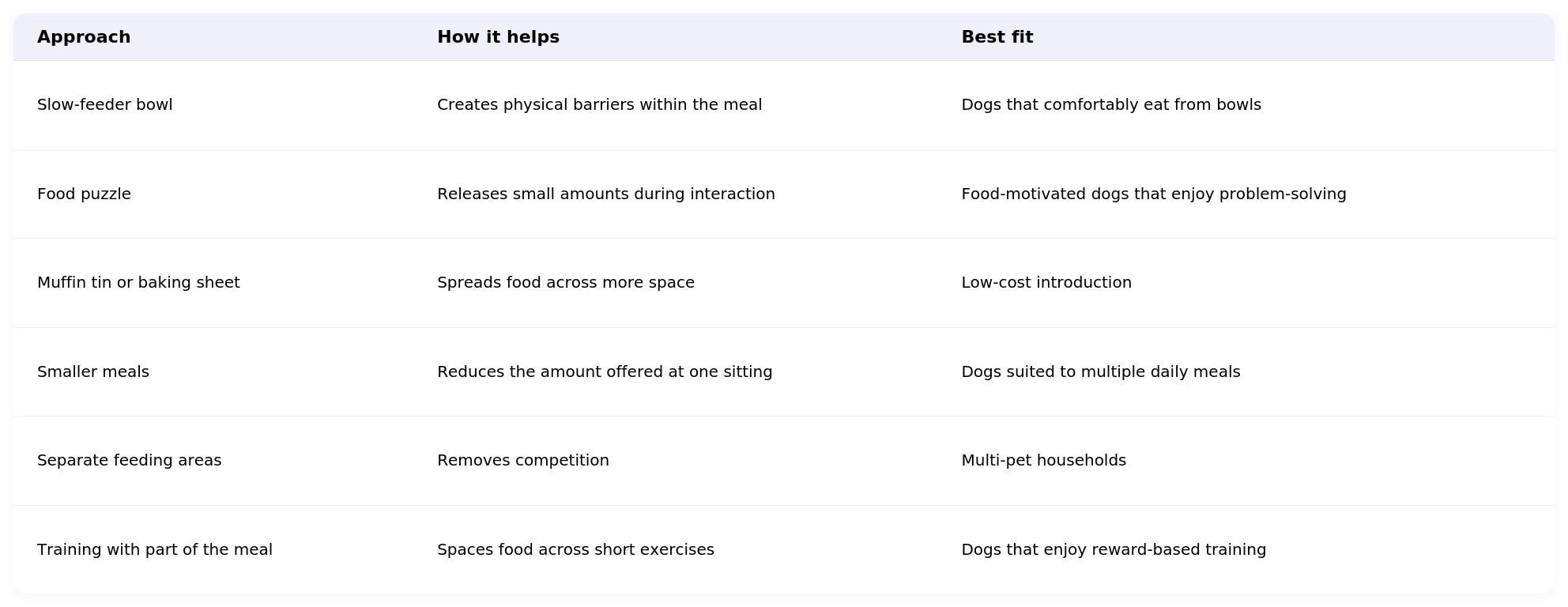
VCA recommends interactive feeders, muffin tins, hidden food portions, and several smaller portions as practical ways to extend mealtime.
Slow-Feeder Bowls
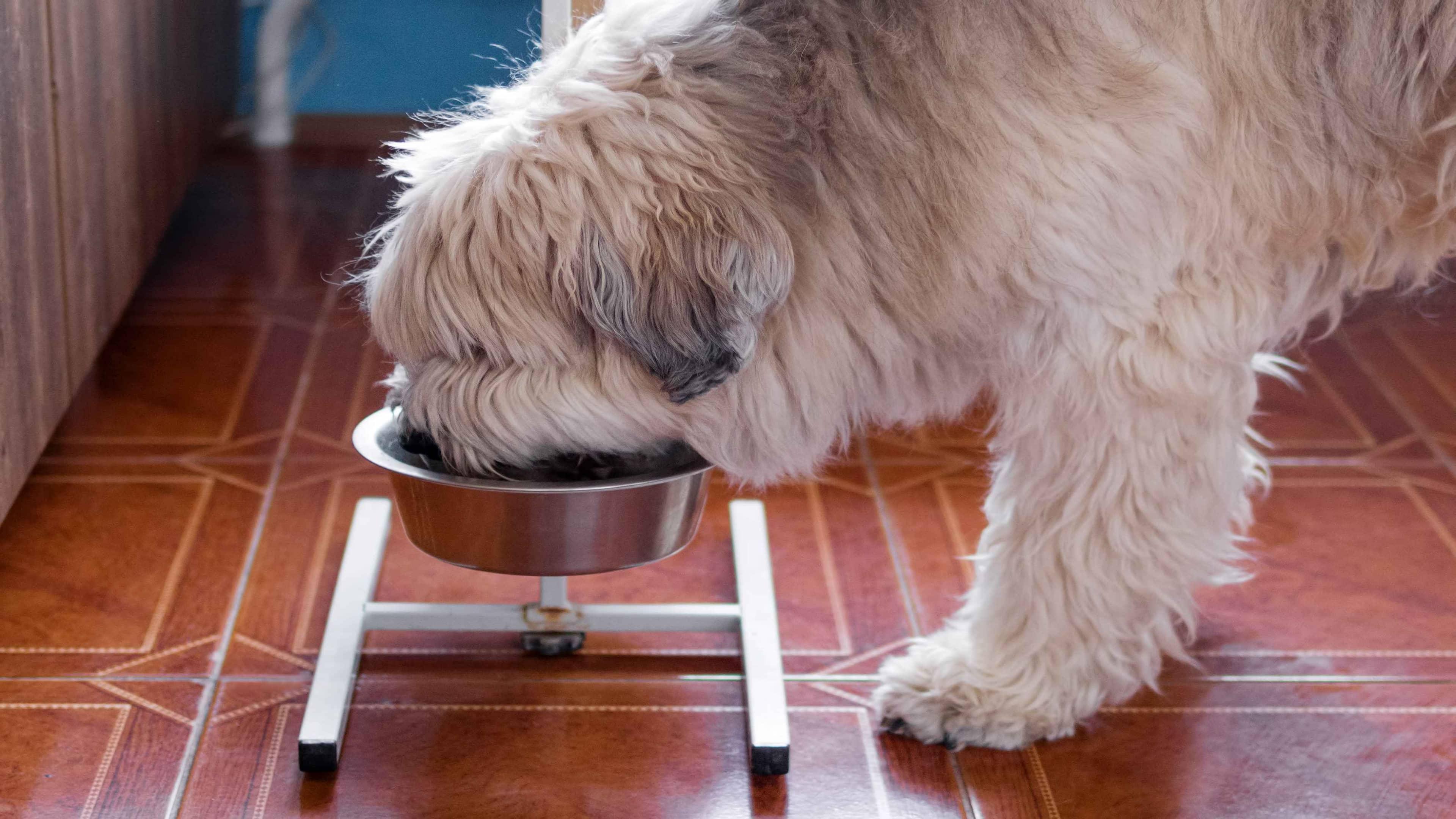
A slow feeder uses ridges or channels to stop a dog from taking one large mouthful after another.
Choose one that:
- is appropriately sized for your dog's muzzle
- stays stable instead of sliding or flipping
- is made from a dog-safe, easy-to-clean material
- lets the dog reach the food without scraping or forcing the face into narrow gaps
Supervise the first few uses. A dog that becomes frantic, bites the feeder, or tries to overturn it may do better with a simpler design.
Puzzle Feeders and Toys
Food-dispensing toys and puzzle boards turn part of the meal into a simple task. AAHA notes that food enrichment can help slow fast eaters while keeping dogs calmly engaged.
Start with an easy puzzle. The goal is not to make dinner frustrating. Increase difficulty only once your dog understands the activity, and supervise toys until you know how the dog uses them.
Feeding Management Tactics
Sometimes the biggest improvement comes from changing the room, not buying another product.
Try:
- Feed pets separately. Use closed doors, gates, or visual barriers if another animal creates urgency.
- Divide the established daily ration when appropriate. Cornell recommends two or more smaller meals as one feeding adjustment for GDV risk reduction.
- Use part of the meal during brief training. VCA suggests using kibble during training sessions as another way to spread food intake over time.
Do not increase the total daily amount just because food is being divided across more sessions.
DIY Hacks and Safety
A muffin tin or a clean baking sheet is often enough to make kibble less concentrated in one spot. For appropriate dogs, portions can also be hidden in safe locations or scattered over a clean, controlled surface.
Avoid loose objects placed inside the bowl. Tennis balls, rocks, toys, or improvised obstacles can be mouthed, swallowed, damaged, or contaminated. Purpose-built feeding equipment is safer than creating an obstruction with an object the dog could ingest.
Supervise any new setup until you know your dog uses it safely.
When to See a Veterinarian
A lifelong enthusiasm for dinner is different from new, excessive hunger.
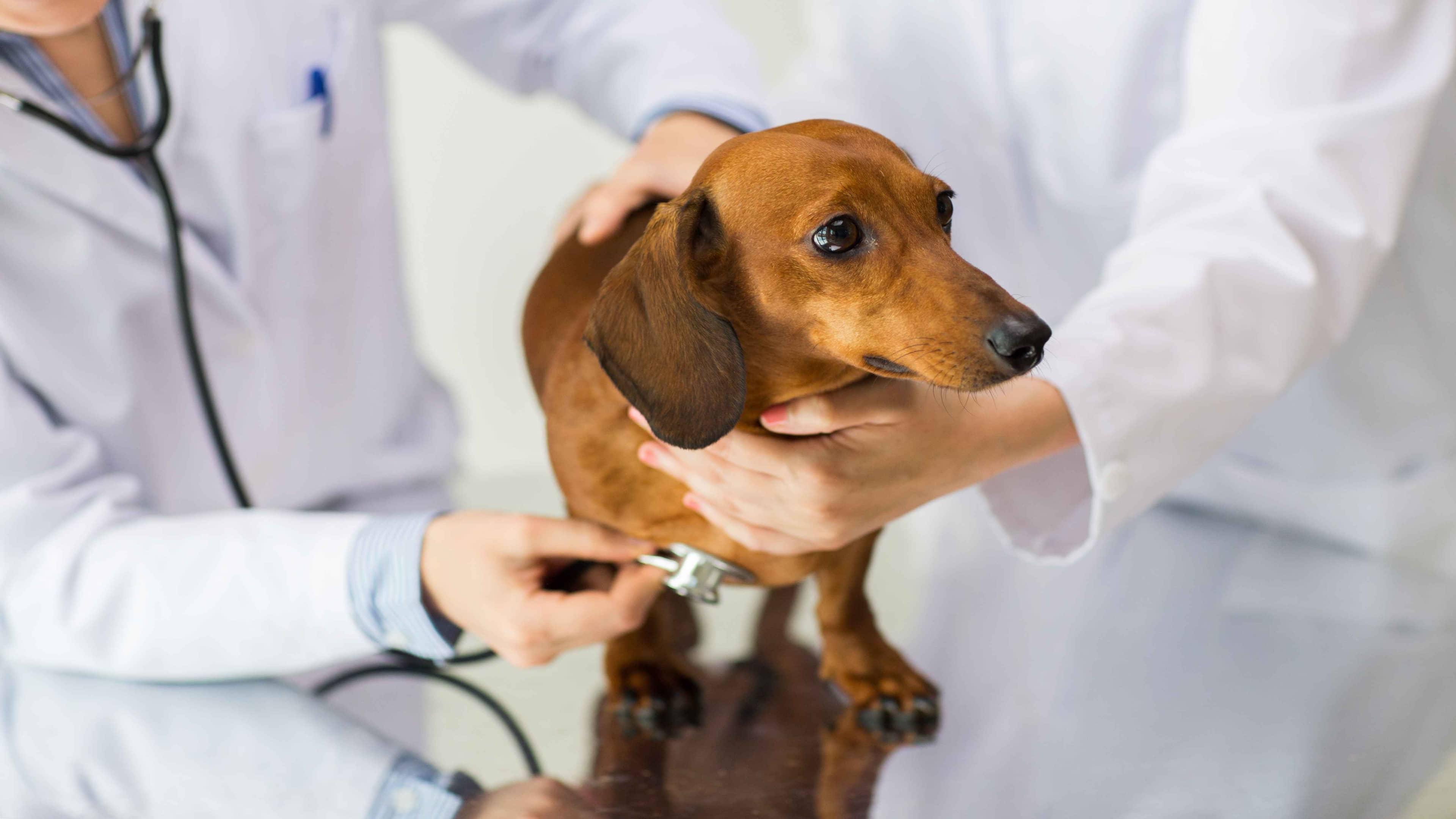
Contact your veterinarian if your dog's appetite suddenly increases or fast eating appears alongside weight loss, excessive thirst or urination, vomiting, diarrhea, abnormal stool, a swollen abdomen, weakness, or another clear departure from baseline. VCA recommends investigating increased appetite when it is paired with weight loss or other symptoms.
Depending on the history and examination, veterinary testing may include bloodwork, urinalysis, blood glucose testing, fecal parasite testing, and further endocrine or gastrointestinal evaluation where indicated. Tests for Cushing's disease, for example, should be chosen based on the dog's clinical picture rather than performed automatically.
Sudden swollen abdomen + repeated unproductive retching + weakness or pale gums → emergency veterinarian now.
Do not wait to see whether a slow feeder fixes those signs.
Hoomanely's guide to behavior changes that can signal illness can help you recognize when a familiar habit has become part of a broader health change.
A Sample Mealtime Plan
Do not change food quantity simply to make meals last longer. Start with the daily amount already appropriate for your dog's age, body condition, health, and diet, then change how that allowance is presented.
Week 1: remove obvious competition and try one simple method, such as a slow feeder, muffin tin, or spread-out meal. Supervise each meal and note whether the dog remains calm and whether regurgitation or vomiting occurs.
Week 2: if the first method is comfortable, add variety rather than difficulty. A meal might use a slow feeder in the morning and an easy food puzzle later. Keep the total daily ration unchanged unless your veterinarian has recommended a dietary adjustment.
This two-week structure is an implementation example, not a veterinary treatment timeline.
A Daily Routine Example
A simple day can look like:
Morning: part of the normal daily ration from a slow feeder.
Midday, if needed: a portion used for a short training or food-search activity.
Evening: the remaining planned ration in a puzzle feeder or calm feeding area.
If midday feeding is not practical, divide the daily ration across the schedule that works for your household and your veterinarian's feeding recommendations. An automatic feeder may help with meal timing, but supervise new feeding devices before relying on them unattended.
Adjustments for Multi-Pet Homes
For dogs that rush meals around another pet:
- feed behind separate doors or secure barriers
- keep bowls out of direct sight when visual competition increases tension
- remove bowls when meals end so one dog cannot move to another pet's food
The goal is predictable access to food without competition.
What an Eating and Drinking Baseline Can Add
A change in the way a dog approaches food can matter more when it appears alongside other changes.
Hoomanely EverBowl™ learns a dog's normal eating and drinking patterns and recognizes when those patterns shift relative to that dog's individual baseline. That context can make it easier to show when a broader change in meals or drinking began and give the veterinary team a clearer longitudinal picture.
EverBowl does not diagnose GDV, diabetes, Cushing's disease, parasites, or the reason a dog is eating quickly. The value is the record. Emergency signs such as abdominal distension, unproductive retching, pale gums, weakness, or collapse require direct veterinary care.
Conclusion
Dogs may eat fast because of competition, learned food urgency, strong food motivation, or an underlying condition that increases appetite. Start with the environment: reduce competition, keep portions appropriate, and try a slow feeder, food puzzle, or another supervised method that makes the same meal take more effort.
A sudden change is different. Unusual hunger paired with weight loss, excessive thirst, vomiting, diarrhea, or another health change deserves veterinary assessment. A swollen abdomen with repeated unproductive retching, weakness, or collapse is an emergency.
FAQs
1.Does a Dog Ever Stop Eating When They Feel Full?
Some dogs regulate intake better than others, and strong food motivation does not necessarily mean nutritional need. VCA notes that some dogs prone to overeating benefit from measured portions and diets formulated to improve satiety. If your dog suddenly seems impossible to satisfy despite an adequate diet, discuss the change with your veterinarian.
2.Can I Add Water to Food to Make My Dog Eat More Slowly?
Adding water is not a reliable substitute for a slow feeder, portion management, or separate feeding. Whether moistening food is appropriate depends on the diet and the individual dog. If the goal is simply to extend mealtime, a purpose-built feeder or spreading the meal safely over a larger surface gives you more control.
3.How Does the 7-7-7 Rule Apply to Feeding Fast Eaters?
There is no established veterinary 7-7-7 rule for slowing a dog's meals. Do not use an internet feeding formula in place of the dog's actual calorie and meal plan. Use the daily amount recommended for the individual dog and adjust meal presentation rather than inventing new portions.
4.Is It Safe to Put a Tennis Ball in a Dog's Food Bowl?
A loose tennis ball is not the safest way to slow a meal because a dog may mouth, damage, or attempt to swallow it. A properly sized slow-feeder bowl, muffin tin, food puzzle, or wide, clean feeding surface is a more controlled option. Supervise any new feeding method.
5.Why Does My Dog Act Like He Is Starving Despite Eating Enough?
Some dogs are naturally highly food-motivated, and household competition or learned food urgency usually explains why the behavior became pronounced. Purina discusses competition and other feeding-related factors as possible contributors.