Dog Pregnancy: Signs, Stages & How to Care for a Pregnant Dog

Cornell notes that canine pregnancy averages about 63 days from ovulation. Heavy bleeding, foul-smelling discharge, collapse, severe illness, or active labor without normal progress requires prompt veterinary attention. When ovulation timing is known, Cornell says delivery can usually be predicted within about 1–2 days of the expected date.
The Short Version
- Cornell notes that canine pregnancy averages about 63 days from ovulation, while estimates based only on the first mating date are less precise.
- AKC guidance places ultrasound confirmation at roughly 25–35 days, VCA notes that relaxin testing may become positive from about 22–27 days, and Merck identifies radiographs after day 55 as the most reliable imaging method for estimating litter size.
- AKC guidance recommends keeping calorie intake close to maintenance through roughly the first two-thirds of pregnancy when the mother begins at a healthy body condition. Energy needs rise during the final weeks, when smaller, more frequent meals and an appropriate growth or reproduction diet may be recommended.
- A temporary rectal temperature drop to below 99°F can occur within 24 hours of whelping, although not every dog shows a detectable drop. Breathing difficulty, collapse, severe illness, or abnormal labor progression needs veterinary attention.
Signs of Pregnancy in Dogs
Early signs of pregnancy in dogs are easy to miss. Some dogs show very little during the first few weeks. As pregnancy progresses, nipple changes, abdominal enlargement, weight gain, appetite changes, lower exercise tolerance, and nesting behavior become more noticeable.
None of these signs confirms pregnancy by itself. False pregnancy can cause mammary enlargement, milk production, nesting, reduced activity, appetite changes, vomiting, and mothering behavior even when no puppies are present. VCA notes that false-pregnancy signs commonly begin 4–9 weeks after a heat cycle, which is another reason veterinary testing matters.
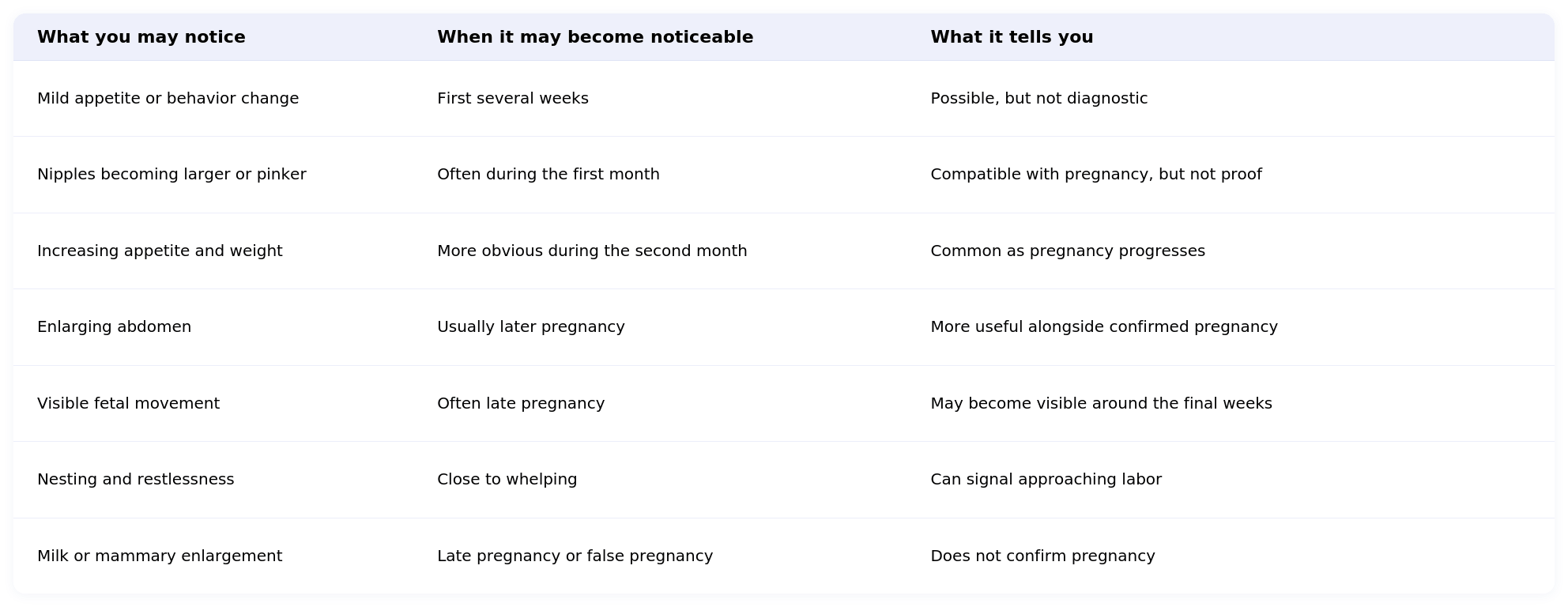
VCA and AKC describe nipple enlargement, abdominal growth, weight and appetite changes, reduced activity, nesting, and mammary changes among signs that may appear as pregnancy progresses, while noting that clinical signs alone do not confirm pregnancy.
Changes in behavior can add useful context too. Hoomanely's guide to behavioral changes that can signal illness explains why a shift from an individual dog's normal routine deserves attention even when the physical signs are subtle.
Dog Pregnancy Stages Week by Week
Canine pregnancy moves quickly. Developmental milestones overlap, and dates based only on mating are approximate. Ovulation timing gives a much more reliable pregnancy clock.
Weeks 1 to 3
Fertilization occurs after mature eggs meet viable sperm, and the developing embryos travel toward the uterus before implantation. AKC notes that implantation occurs at roughly 18–23 days. Many dogs show no obvious outward signs during these first weeks.
- Keep feeding the normal, appropriate maintenance diet unless your veterinarian advises otherwise. Extra calories are not generally needed this early.
- Record mating dates and arrange veterinary guidance, particularly if breeding was planned or pregnancy would create additional health risks.
Small appetite changes or a quieter-than-usual few days can happen, but those signs are too nonspecific to diagnose pregnancy.
Weeks 4 to 6
Pregnancy becomes easier to confirm during this period. AKC guidance places ultrasound confirmation at roughly 25–35 days, while VCA notes that relaxin testing may become positive from about 22–27 days. A veterinarian may also use careful abdominal palpation around the fourth week. Owners should not attempt palpation themselves.
You may begin seeing:
- enlargement or pinkening of the nipples
- changes in appetite
- gradual weight gain
- more obvious abdominal development
Some dogs experience temporary nausea or vomiting around early pregnancy. Persistent vomiting, poor intake, weakness, or dehydration should not simply be labeled “morning sickness.”
AKC guidance recommends keeping calorie intake close to maintenance through roughly the first two-thirds of pregnancy when the mother begins at a healthy body condition.
Weeks 7 to 9
Most fetal growth occurs late in pregnancy, which is when nutrition and space in the abdomen become more demanding.
Merck notes that after about day 55, fetal skeletons are sufficiently mineralized for radiographs to become the most reliable imaging method for estimating litter size. Knowing the expected number of puppies helps the veterinary team and owner judge whether whelping has finished.
AKC notes that energy needs rise in late pregnancy and that some dogs may ultimately require roughly 35–50% more food than usual, depending on body condition and litter demands. Smaller, more frequent meals are often easier to tolerate because the enlarged uterus leaves less abdominal space for the stomach.
Activity can continue if the dog is comfortable, but late pregnancy is not the time for strenuous new exercise. Short walks and normal gentle movement are generally more appropriate than intense running, rough play, or unfamiliar physical challenges.
As birth approaches, nesting, panting, restlessness, reduced appetite, and changes in sleep may become more noticeable.
Week 10 And an Extended Pregnancy
A dog that reaches “week 10” based on the first mating date is not automatically overdue. Sperm can survive for several days, eggs mature after ovulation, and mating may occur before or after the actual ovulation date. Cornell notes that first-breeding dates can place expected delivery roughly 63 ± 7 days from that mating, while ovulation timing predicts whelping much more precisely.
If the ovulation date is known and the expected due date passes, or if the mother's health, fetal movement, discharge, appetite, or behavior causes concern, contact the veterinarian who is managing the pregnancy. Breed, litter size, maternal history, fetal size, and previous dystocia can all affect planning, including whether a cesarean delivery should be considered.
How Can I Confirm My Dog's Pregnancy?
Veterinary ultrasound, a relaxin blood test, palpation by an experienced veterinarian, and later radiographs are the main options. The right test depends largely on how many days have passed since mating or ovulation.
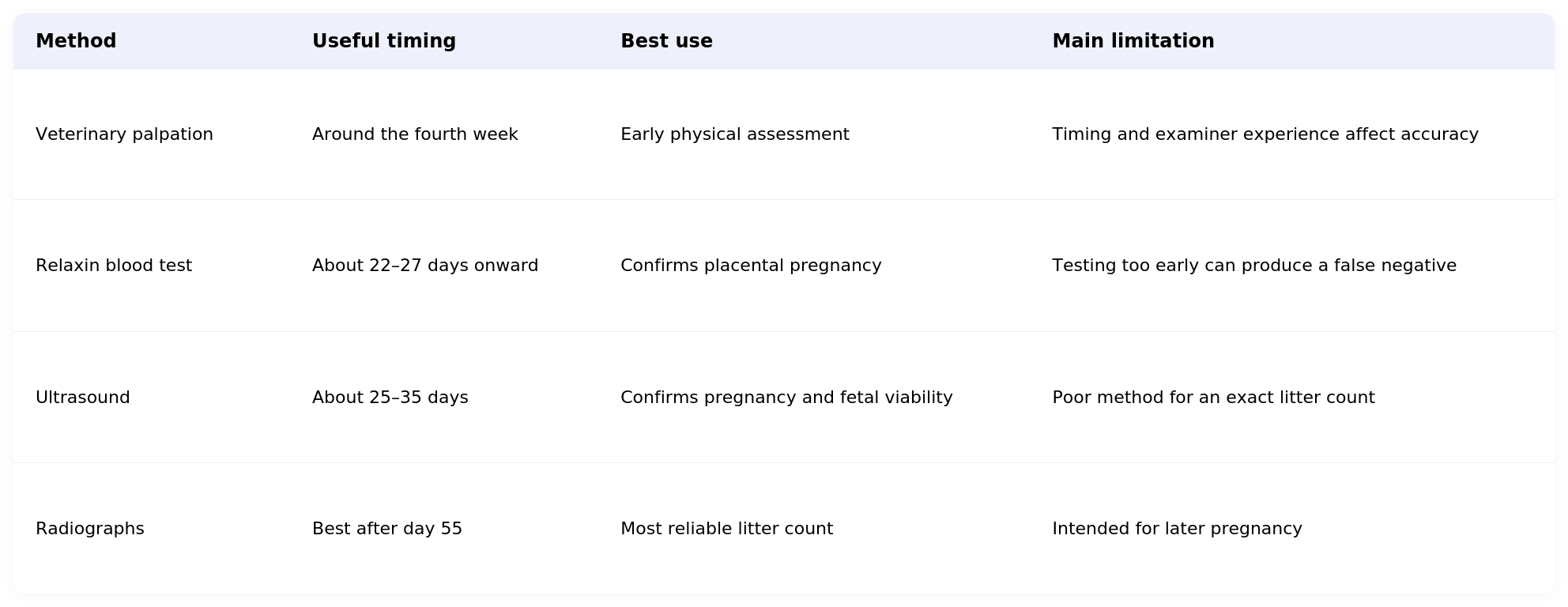
Merck states that late-pregnancy radiography after 55 days is the best method for determining litter size. Ultrasound becomes reliable much earlier and can confirm living fetuses.
At home, do not press or repeatedly feel the abdomen in an attempt to find puppies. Record mating dates, note changes, and let the veterinary examination establish whether pregnancy is present.
How to Care for a Pregnant Dog
Good care for a pregnant dog changes as pregnancy progresses. The goal is steady maternal condition, appropriate fetal growth, safe medication choices, and preparation for delivery.
Confirm pregnancy → maintain normal nutrition early → increase nutritional support in the final third → prepare for whelping
Keep Nutrition Stable Early
For approximately the first two-thirds of pregnancy, a healthy dog already eating an appropriate complete and balanced food usually remains on her normal intake. Increasing calories too soon can contribute to unnecessary maternal weight gain.
Increase Support During the Final Weeks
AKC guidance notes that energy needs rise substantially during the final weeks of pregnancy. Your veterinarian may recommend transitioning to an appropriate calorie-dense growth or reproduction formula and gradually increasing total intake.
Do not add calcium routinely to a complete and balanced pregnancy diet. Merck warns that oral calcium supplementation during pregnancy may increase the risk of postpartum hypocalcemia rather than prevent it.
Keep Exercise Familiar and Moderate
Continue comfortable daily movement as tolerated. Avoid suddenly starting strenuous exercise, high-impact activity, or rough physical play late in pregnancy.
For days when outdoor activity needs to be gentler, Hoomanely's indoor exercise ideas can be adapted to the dog's comfort and veterinary advice.
Review Every Medication and Parasite Product
Review vaccination and deworming plans with the veterinarian managing the pregnancy. Do not give a vaccine, dewormer, flea or tick product, supplement, or other medication simply because it was used safely before pregnancy. Product safety varies during gestation, so the exact treatment and timing should be veterinarian-directed.
Hoomanely's parasite prevention guide provides broader background, but the pregnancy-specific product choice should come from the veterinarian managing the mother.
How to Prepare for Whelping and Birth
Set up the whelping area before labor begins. The mother should have time to become comfortable there while she is still moving easily.
Close to birth, Cornell notes that dogs may show intense nesting, increased panting, and discomfort. A temporary rectal temperature drop to below 99°F can occur within 24 hours of whelping, although the drop is not detected in every dog.
Prepare:
- A clean, appropriately sized whelping box in a quiet area.
- Washable bedding and replacement towels.
- Your regular veterinarian's number.
- The nearest emergency veterinary hospital's number and route.
- The expected litter count if late radiographs were performed.
- Clean towels and basic supplies recommended by your veterinarian.
- A plan for keeping newborn puppies warm while the mother continues labor.
Dogs pass through three stages of labor. Stage I involves cervical dilation and uterine contractions that may not yet be visible. Stage II is active delivery of puppies. Placental delivery occurs alongside puppy delivery as Stage III.
When Whelping Needs Urgent Veterinary Help
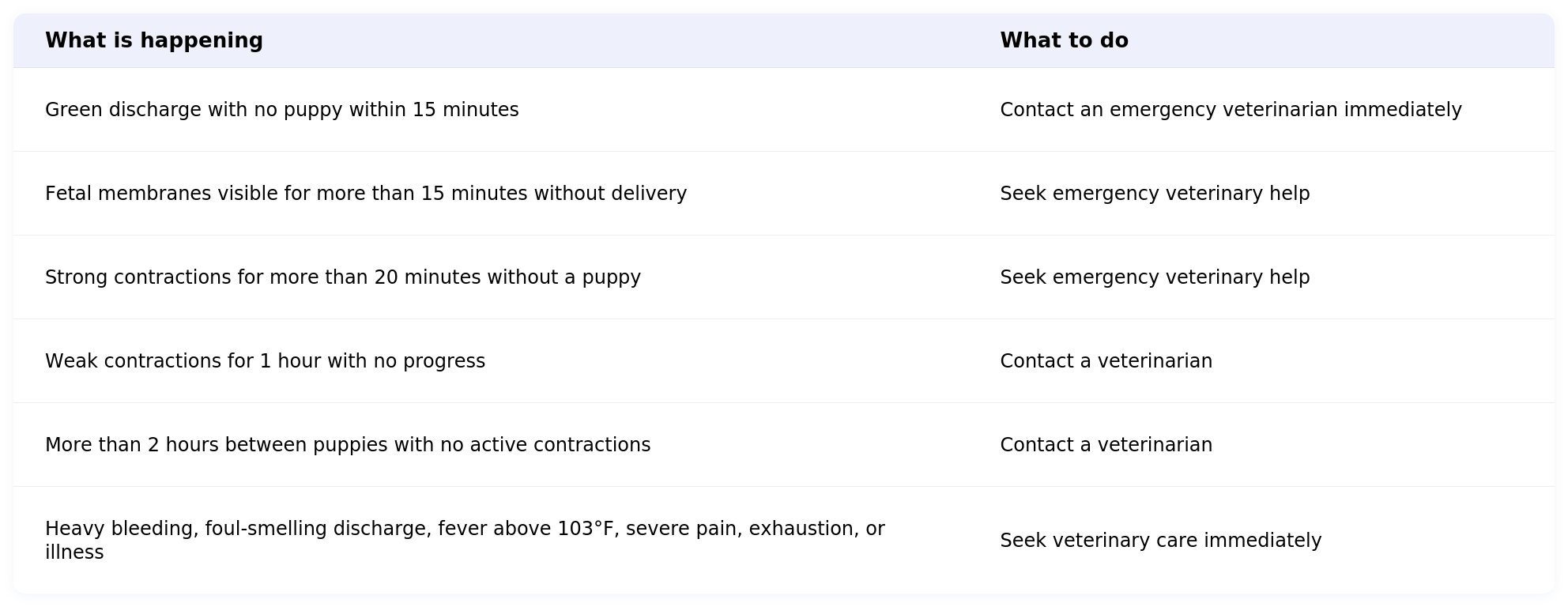
These thresholds are practical veterinary decision points. If something looks wrong before a threshold is reached, call your veterinarian or emergency clinic. Whelping emergencies can change quickly.
What an Eating and Drinking Baseline Can Add During Pregnancy
Pregnancy changes appetite, meal size, and drinking patterns over a short period. It can be hard to reconstruct those changes accurately later, especially in the final weeks when veterinary appointments and whelping preparation are competing for attention.
Hoomanely EverBowl™ learns a dog's normal eating and drinking patterns and recognizes how those patterns change relative to that dog's individual baseline.
That context can help:
- show when eating or drinking began to shift
- add a longitudinal history to observations made at home
- give the veterinary team more context alongside weight, behavior, pregnancy stage, medications, and clinical signs
EverBowl does not confirm pregnancy, predict labor, diagnose pregnancy complications, or determine whether a whelping emergency is occurring. The value is the record. A pregnant dog with abnormal discharge, severe weakness, persistent vomiting, difficulty breathing, abnormal labor progression, or another urgent sign needs direct veterinary assessment.
Conclusion
Dog pregnancy moves quickly. The most reliable timeline is based on ovulation, with whelping expected at about 63 days, usually within roughly 1–2 days when ovulation timing is known. Ultrasound and relaxin testing can confirm pregnancy earlier, while radiographs after day 55 are particularly useful for counting puppies.
Once pregnancy is confirmed, work with your veterinarian on nutrition, medications, parasite control, and a whelping plan. Keep the normal diet through the first two-thirds unless advised otherwise, then adjust nutrition for the final weeks. Your best next step is simple: record the breeding information you have and schedule veterinary confirmation rather than trying to judge the signs of pregnancy in dogs on your own.
FAQs
1.How Soon Can You Feel Puppies Moving Inside the Womb?
Owners may sometimes notice or see fetal movement through the abdomen during late pregnancy, often during the final few weeks. AKC describes visible puppy movement at around day 50, but it varies with litter size, body condition, and the individual dog. Do not repeatedly press the abdomen to look for movement.
2.Is Morning Sickness Normal in a Pregnant Dog?
A mild, temporary appetite change or occasional vomiting can occur early in pregnancy, particularly around implantation. Persistent vomiting, inability to keep food or water down, marked lethargy, pain, or dehydration is not something to dismiss as routine pregnancy and should be discussed with a veterinarian.
3.Are Calcium Supplements Safe for Pregnant Dogs?
Do not routinely give calcium supplements to a pregnant dog eating a complete and balanced diet unless the veterinarian managing the pregnancy specifically prescribes them. Merck warns that excessive oral calcium during pregnancy can interfere with normal calcium regulation and may increase the risk of postpartum eclampsia.
4.Can I Bathe My Dog While She Is Pregnant?
A healthy pregnant dog can generally be kept clean, but handling should become gentler as the abdomen enlarges. Avoid stressful restraint, slippery surfaces, extremes of water temperature, and medicated shampoos or topical products that have not been cleared for pregnancy. If the dog has pregnancy complications or is close to whelping, ask your veterinarian before bathing.
5.What Does Clear or White Mucus Discharge Mean in a Pregnant Dog?
Cornell notes that clear-to-white vaginal discharge may occur before birth, and a clear or white sac protruding from the vulva means whelping should be imminent. Green discharge is different because it can indicate placental separation and should be followed promptly by a puppy. Green discharge without a puppy within 15 minutes warrants urgent veterinary help.
6.Is It Normal for a Pregnant Dog to Stop Eating Before Birth?
Reduced appetite can occur close to whelping. AKC notes that some dogs stop eating in the days immediately before delivery, and appetite loss may become noticeable around the end of pregnancy. Appetite change should be interpreted alongside nesting, panting, restlessness, temperature changes, and the expected due date. A dog that is weak, repeatedly vomiting, painful, or otherwise ill needs veterinary assessment.