Dog Sleep Problems: Causes, Signs, Treatment & Tips for Better Sleep
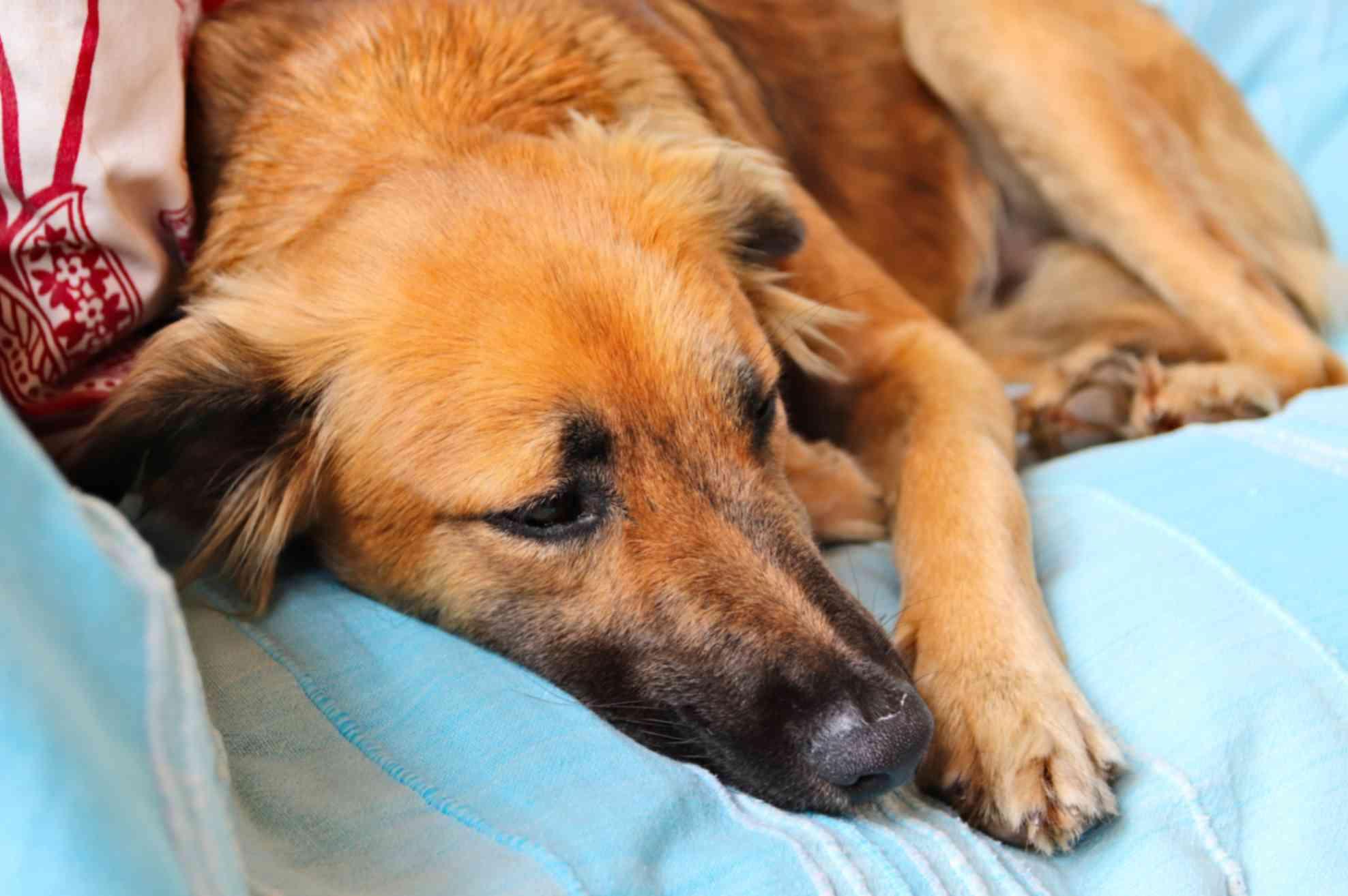
Healthy adult dogs sleep 12 to 14 hours a day. When that pattern breaks, the cause is almost always one of four things: pain, anxiety, airway obstruction, or age-related cognitive decline. This guide explains how to tell them apart, what to record before your vet visit, and which signs need same-day care.
Sleep disruption is worth taking seriously. The 2023 AAHA Senior Care Guidelines list disrupted sleep as an early indicator of canine cognitive dysfunction. A dog pacing the house at 3 a.m., or snoring far louder than usual, is giving you information. The job is to capture it.
The short version
- Night pacing, loud snoring, or restlessness usually traces back to pain, anxiety, breathing trouble, or cognitive decline.
- The four conditions vets diagnose most often are secondary insomnia, sleep apnea, narcolepsy, and REM sleep behavior disorder. Each needs an exam to confirm.
- A one-week log of sleep, appetite, and water intake, plus short videos of episodes, gets you to a diagnosis faster than any description from memory.
- Breathing pauses, fainting, blue gums, or injury during an episode are emergencies. Go the same day.
What causes sleep problems in dogs?
Causes rarely arrive alone. Physical pain and stress overlap, and age amplifies both. A senior dog with sore joints may also be disoriented after dark. The most common drivers:
Pain. Joint stiffness and dental disease top the list. Cornell's Riney Canine Health Center notes that most dogs show periodontal disease by age three, and untreated mouth pain is a frequent, overlooked reason a dog cannot settle.
Airway obstruction. Excess weight and flat-faced anatomy narrow the airway during rest. UC Davis veterinary researchers identify brachycephalic airway syndrome as the primary predisposing factor for obstructive breathing in sleep.
Cognitive decline. Canine cognitive dysfunction, the dog equivalent of dementia, produces confusion and restlessness in older dogs, often worse at night.
Anxiety and environment. Noise, routine changes, light, and room temperature all register. So does timing: a meal right before bed means a bathroom trip at 2 a.m., and dogs are naturally more alert at twilight.
Systemic conditions. Thyroid and adrenal imbalances shift the internal clock. Fleas and allergies wake dogs mid-cycle with itching.
How to spot the problem at home
Precise notes beat vague impressions. Log every event with a timestamp for one full week, and set up an indoor camera; most of what matters happens after dark.
At night, watch for circling or constant repositioning, whining without a trigger, heavy or strained snoring, and intense leg paddling or snapping during sleep. During the day, watch for unusual exhaustion, naps that arrive without warning, appetite or thirst changes, and confusion such as getting stuck in corners, particularly in older dogs.
Record short video clips of anything episodic. Home video is a primary diagnostic aid for neurological events, and it is often the difference between a confirmed diagnosis and a guess. Log meals and water alongside sleep notes; the connections between them are where diagnoses hide.
The four most common diagnoses
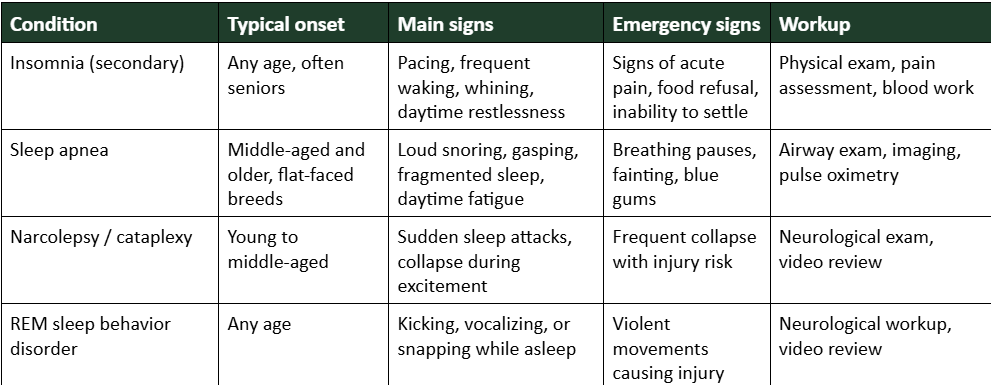
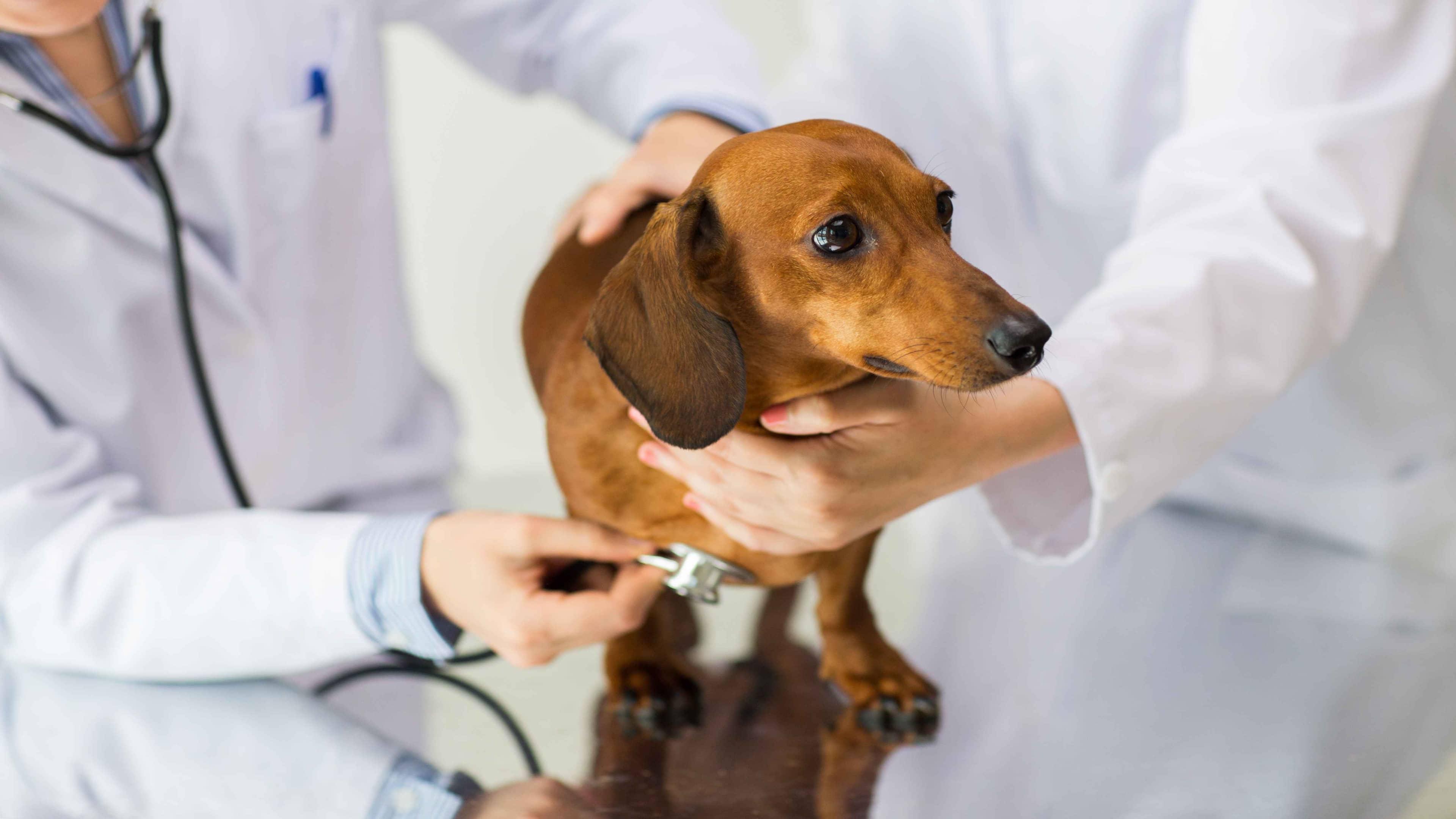
Go to an emergency clinic if your dog stops breathing, shows blue gums, has a seizure, or is injured during an episode. For everything else, bring your log and videos to your regular vet.
Insomnia
Insomnia in dogs is almost always secondary to something else: pain, anxiety, cognitive dysfunction, or a urinary condition. It shows up as whining at 2 a.m., pacing through the night, or restlessness that spills into the day. Arthritis, dental pain, and bladder issues are the most frequent underlying causes, so watch for appetite loss or new pain signs alongside the sleep change.
Sleep apnea
Obstructive sleep apnea occurs when the airway narrows during rest. Flat-faced breeds and overweight dogs carry the highest risk. Owners typically notice loud snoring, gasping, and daytime exhaustion. Any prolonged breathing pause is a medical emergency. Vets start with weight management and assess whether surgical airway correction is needed.
Narcolepsy
A narcoleptic dog collapses or loses muscle control suddenly, usually during excitement. The genetics are well established: Stanford researchers traced canine narcolepsy in Dobermans and Labradors to a mutation in the hypocretin receptor 2 gene. The main risk is injury from falling near stairs or water. Film the specific triggers; it sharpens the diagnosis considerably.
REM sleep behavior disorder
Most dogs twitch during dreams. This condition produces much more: hard kicks, jaw snapping, lunging. Episodes can injure the dog or anyone nearby. The reliable home test: a dog with REM sleep behavior disorder wakes when roused. A seizing dog stays unresponsive. Management centers on making the sleeping area safe and ruling out underlying disease.
Treatment, and what you can do tonight
Treatment follows the cause. Vets rule out pain and airway obstruction before reaching for medication, and some obstructions need surgery, while narcolepsy and REM sleep behavior disorder are managed with medication under veterinary supervision. While the workup runs, the environment is yours to control.
End intense play two hours before sleep. Build a fixed wind-down: short walk, calm contact, same sleeping spot, dark and quiet. Move dinner and the last bathroom walk earlier. For seniors, the AAHA guidelines recommend environmental modification as the first-line approach: orthopedic bedding in a warm, quiet room, and a nightlight if disorientation is part of the picture. A white-noise machine masks outside sound, and a humidifier eases breathing for flat-faced breeds. If dream enactment is the issue, clear hard objects from the sleeping area.
One caution: do not restrict water without veterinary guidance. The ASPCA warns that unguided water restriction risks dehydration, especially in dogs on medication. And skip over-the-counter sedation, Benadryl included; it excites some dogs rather than sedating them, and masking symptoms can delay diagnosis of a treatable condition.
Give home changes one week. If nothing improves, or if you see fainting or labored breathing at any point, call the clinic.
Why your dog's bowl knows about their sleep
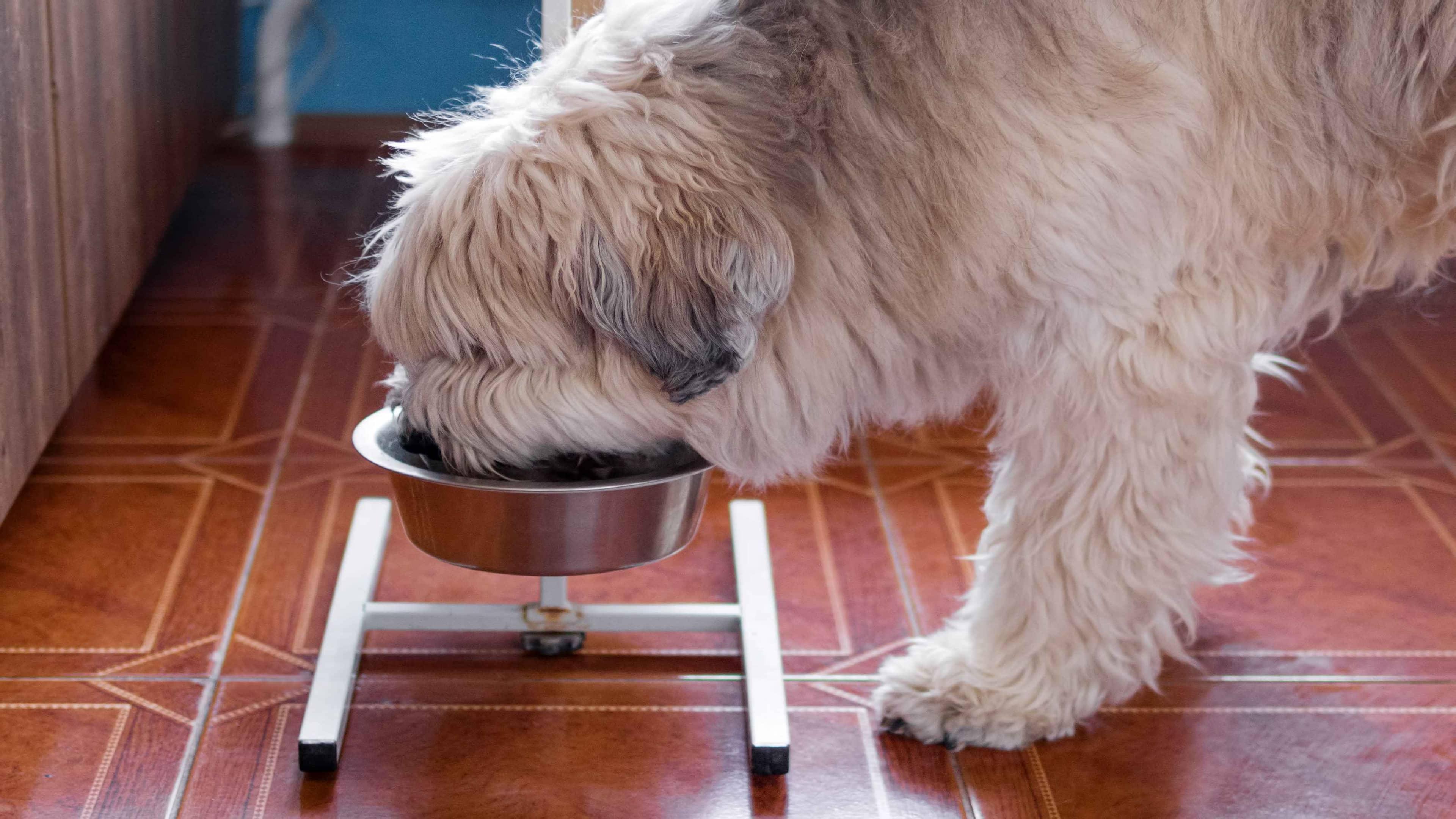
Appetite and sleep fail together more often than either fails alone. A gradual decline in meals alongside worsening nights points a clinician toward metabolic, urinary, or pain workups faster than a sleep log alone. Track intake however you can, in a notebook or automatically.
This is the context EverBowl provides. It monitors eating and drinking patterns, not sleep. But a seven-day intake trend sitting next to your sleep log gives your vet a picture neither record provides on its own. No device replaces a clinical exam. When in doubt, phone the clinic.
FAQs
What is sundowning in dogs?
Restlessness or pacing in a senior dog as evening falls. It usually stems from canine cognitive dysfunction, which the AAHA describes as the canine equivalent of dementia. It is a recognized part of aging, not a sudden illness, and your vet can suggest management strategies if it disrupts sleep.
How much sleep do adult dogs need?
Most healthy adults rest 12 to 14 hours across a 24-hour cycle, naps included. Every dog has its own rhythm, so a sudden change in either direction matters more than the exact number.
How do I tell a seizure from REM sleep behavior disorder?
Responsiveness. A seizing dog stays unresponsive to voice and touch even while paddling. A dog with REM sleep behavior disorder wakes when touched or called. Capture episodes on video; a neurologist will want to see them.
Can I give my dog Benadryl to help them sleep?
Not without veterinary guidance. Diphenhydramine sedates some dogs and excites others, and the ASPCA advises against over-the-counter sedation without a vet's input. Masking symptoms can delay diagnosis of a treatable condition.
Can changing my dog's food improve their sleep?
Sometimes. A more digestible food means less gas and bloating, and fewer wake-ups. A lighter evening meal can prevent hunger waking. Log a full week after any switch so your vet can judge whether it helped, and run dietary changes past them first.
Can EverBowl help my vet diagnose a sleep problem?
Indirectly, yes. EverBowl tracks eating and drinking patterns, and gradual intake changes often surface days before they are visible at the bowl. Bring those trends to your vet alongside your sleep observations; together they narrow the diagnosis faster than either record alone.