What Is a Normal Dog Temperature? How to Check It & When to Worry
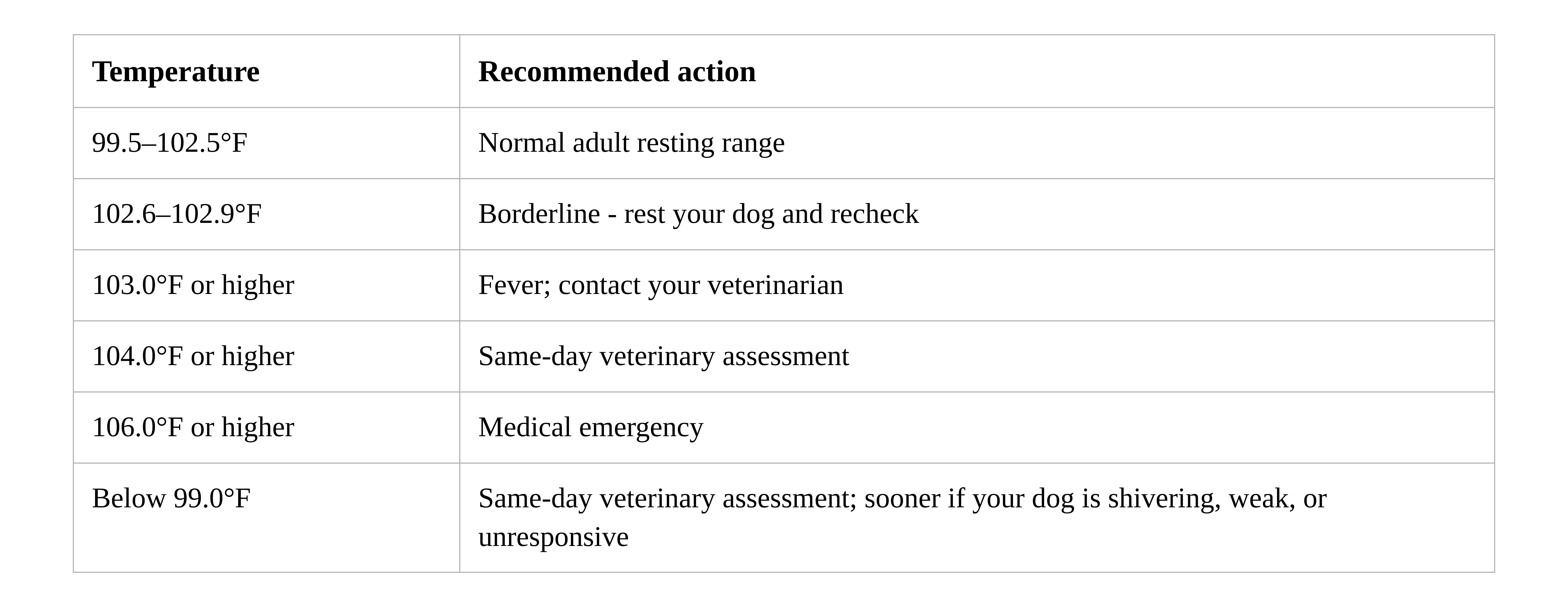
A normal rectal temperature for an adult dog is about 99.5°F to 102.5°F. A temperature of 103.0°F or higher is consistent with fever; 104.0°F or higher calls for same-day veterinary assessment, and 106.0°F or higher is a medical emergency. A reading below 99.0°F also calls for same-day veterinary assessment. Puppies are different: newborns normally run considerably cooler and reach the adult range over their first month.
The Short Version
- A normal adult dog's rectal temperature range is approximately 99.5°F to 102.5°F.
- A temperature above 103°F is a fever. Readings above 104°F or below 99°F call for urgent veterinary contact.
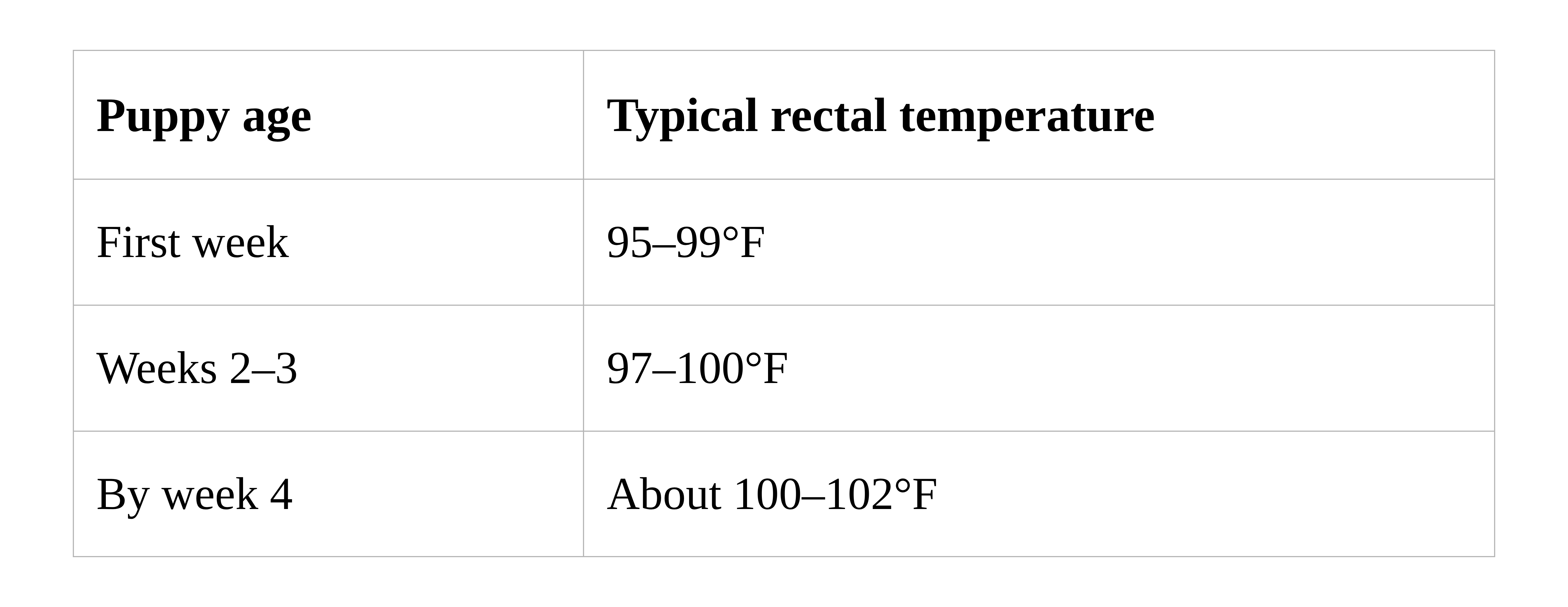
- Puppies run cooler at birth and reach the adult range by about four weeks old. (Purina)
- The most accurate answer to how to check a dog's temperature at home is a lubricated digital rectal thermometer.
Normal dog temperature range
The average dog temp for a healthy adult, measured rectally, falls within 99.5–102.5°F. A reading of 103.0°F or higher is generally considered a dog fever temperature. Readings between 102.6°F and 102.9°F sit just above the normal range - let your dog rest and recheck rather than treating it as a fever.
Exercise, excitement, and stress can temporarily increase body temperature, so measure at rest when possible. Temperature elevation after significant heat exposure should not be dismissed as a routine variation.
A temperature below 99°F is abnormally low and warrants prompt veterinary attention. On the high end, 104°F+ needs a same-day vet call, and 106°F+ is an emergency, since organ damage becomes a real risk.
Normal puppy temperature range
Puppies don't start at the adult range. A newborn runs cooler since their bodies can't yet regulate temperature the way an adult dog's can. That range climbs over the first few weeks, reaching roughly 100°F by four weeks old and settling into the adult range of about 99.5°F to 102.5°F from there.
A neonatal puppy whose temperature falls below the expected range needs prompt veterinary guidance because young puppies cannot regulate body temperature effectively.
How to check your dog's temperature
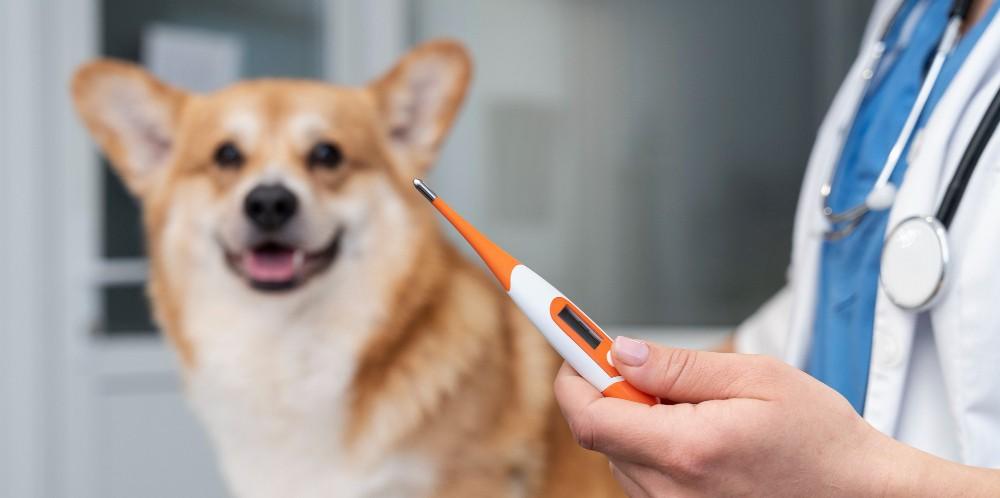
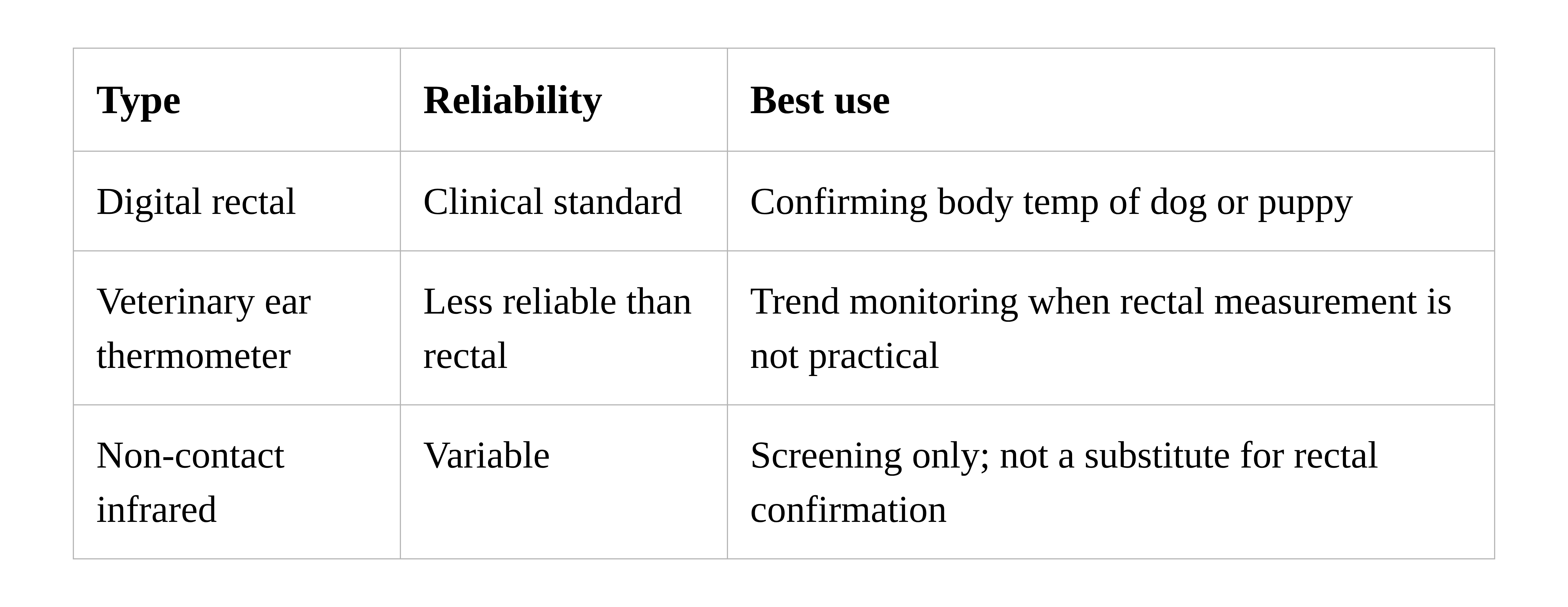
Rectal temperature is the clinical standard for dogs. Ear thermometers can be useful but should not be considered interchangeable with rectal measurements. Non-contact infrared devices are the least reliable of the three for dogs, since fur interferes with an accurate surface reading. Get your dog calm in a quiet room first, have your thermometer and lubricant ready, and bring a second person if your dog is wiggly or anxious.
Rectal technique
- Lubricate the tip with a water-based or petroleum lubricant.
- Lubricate the thermometer tip and insert it gently into the rectum according to the device instructions. Never force it.
- Hold it in place until the thermometer signals that the reading is complete.
- Clean and disinfect the thermometer according to the manufacturer's instructions.
Common errors: inserting too shallow (falsely low reading), hitting stool instead of the rectal wall, or measuring right after excitement or activity. One person can usually manage a small or calm dog alone; for a larger or anxious dog, have a second person steady the front end. Stop immediately if your dog becomes distressed rather than pushing through it.
Ear and infrared technique
An ear thermometer measures infrared heat from the eardrum and gives a reading in a few seconds, appealing for a dog who won't tolerate a rectal reading. A peer-reviewed comparison of auricular and rectal thermometry in dogs found the two methods should not be treated as interchangeable, since the difference between them was too large and inconsistent for clinical decisions.
- Confirm rectally if the ear reading is abnormal or inconsistent with the dog's condition.
- Placement: the probe needs a clear, debris-free angle, and an ear infection makes the reading unreliable and the process painful.
- Treat an ear reading as a first pass. Confirm rectally if it comes back high, low, or your dog seems unwell despite a normal reading.
Safety and restraint
- Keep the room quiet and use a calm voice.
- Two-person technique works best for large or wiggly dogs: one holds and reassures, the other manages the thermometer.
- Do not attempt a rectal reading on a dog who is growling, snapping, or in obvious pain. Use an ear thermometer instead, or go straight to your vet.
- A dog in pain can bite even if they never have before. Stop and call your vet if restraint becomes a struggle.
Which thermometer is best for dogs?
If you only own one thermometer, make it a dedicated digital rectal thermometer kept with your dog's supplies, never one shared with a person.
A simple digital thermometer with a flexible tip and easy-to-clean surface is sufficient for most households.
When is a dog's temperature an emergency?
The American Animal Hospital Association's (AAHA) emergency and critical care guidelines recommend stopping active cooling at approximately 103°F to prevent overcooling in hyperthermic patients.
When to call the vet
Call immediately for any emergency-threshold reading or for fever paired with vomiting, breathing trouble, collapse, or pale gums. For a persistent but non-emergency fever, book same-day rather than waiting it out. Have the exact temperature and when you took it, note other symptoms (appetite, energy, vomiting, diarrhea, coughing), and mention recent exposures like a new medication or vaccination. Most clinics triage by phone first, so having those details ready saves time on both ends.
What the temperature doesn't tell you
A single temperature reading is one data point taken once. It tells you about that moment, not the days leading up to it. Appetite, water intake, and how your dog eats day to day fill in the rest, and changes there often show up before or alongside a fever, not after.
This is where Hoomanely EverBowl fits in. EverBowl™ learns your dog's normal eating and drinking patterns and shows how those patterns change over time. The intake history gives your veterinarian additional context alongside manually measured temperatures and other symptoms. EverBowl™ does not diagnose fever or replace a thermometer.
- Daily: Did your dog finish their meal?
- Daily: Is water intake normal, up, or down?
- Daily: Is stool normal, and does your dog seem playful or unusually flat?
- Log anything unusual for a few days rather than reacting to a single off day.
Conclusion
A normal adult dog's rectal temperature is approximately 99.5–102.5°F. The normal puppy temperature range depends on age, starting much lower at birth and reaching adult levels by about four weeks. Rectal temperature remains the reference measurement for dogs. Alternative methods can be useful, but abnormal or borderline readings may need rectal or veterinary confirmation. Keep a simple baseline log of your dog's temperature range when healthy, pair any reading with how your dog is eating and drinking, and call your vet when a number or a pattern doesn't sit right. Temperature, symptoms, and recent changes together give your veterinarian more useful clinical context than any single measurement alone.
FAQs
1. Can I use a human thermometer on my dog?
A standard digital thermometer can be used for rectal temperature measurement in a dog if it is appropriate for that use. Keep it dedicated to the pet and follow cleaning instructions.
2. What does it mean if my dog's temperature is 99°F?
99°F is below Merck's listed adult reference range of 99.5–102.5°F. Recheck the temperature if measurement error is possible and contact your veterinarian if the reading remains low or your dog is unwell.
3. Why are my dog's ears warm but they have a normal temperature?
Warm ears can come from sun exposure, recent activity, or simply more blood flow to the area, and don't reliably indicate fever on their own. A rectal reading, compared against the average dog temp of 99.5–102.5°F, tells you what's actually going on.
4. How long should I wait to retake my dog's temperature if it's high?
If the reading is only mildly elevated and your dog has just exercised or is highly excited, let them rest and follow your veterinarian's guidance on rechecking. Do not delay care for an emergency-level temperature or serious symptoms.