Essential Dog Care Tips for Everyday Health and Preventive Care
Good dog care is built around a small set of routines repeated consistently: a complete and balanced diet, fresh water, daily movement, preventive veterinary care, vaccination, year-round parasite protection, dental care, grooming, and a safe home. Those basics matter more than constantly changing products or adding complicated wellness routines.
This guide is designed for new dog parents and busy caregivers who want practical pet care tips they can actually maintain. The pet care advice here follows AAHA, CAPC, AVSAB, and ASPCA guidance rather than trends.
The Short Version
- Feed a complete and balanced diet appropriate to your dog's life stage, keep fresh water available, provide daily movement and enrichment, and keep treats to no more than 10% of daily calories. AAHA recommends that at least 90% of calorie intake come from complete and balanced nutrition.
- Preventive care is ongoing. Vaccination schedules depend on age and risk, while the Companion Animal Parasite Council recommends year-round broad-spectrum parasite protection and annual heartworm testing for dogs.
- AAHA describes the 3-3-3 rule as an adjustment framework for newly adopted dogs: roughly three days to decompress, three weeks to learn the household routine, and three months to become more settled. It is a guideline, not a medical or behavioral deadline.
- Daily toothbrushing, regular coat and skin checks, updated identification, and a toxin-safe home make routine care more preventive. AAHA recommends daily brushing for meaningful plaque control.
Pet Care Tips at a Glance
The core routine is simple: feed appropriately, provide fresh water, exercise your dog every day, keep preventive veterinary care current, protect against parasites, care for the teeth and coat, and remove avoidable hazards at home.
Consistency makes changes easier to spot. If a dog normally finishes breakfast, drinks after a morning walk, and greets everyone at the door, a sudden shift in two or three of those behaviors is more informative than an isolated quiet afternoon.
During the first month with a new dog, prioritize a veterinary exam, vaccination and parasite records, current ID and microchip information, a predictable feeding and toilet routine, safe exercise, and gradual adjustment to the home. Do not try to solve training, diet, socialization, grooming, and every health concern in the first weekend.
Daily Diet and Hydration
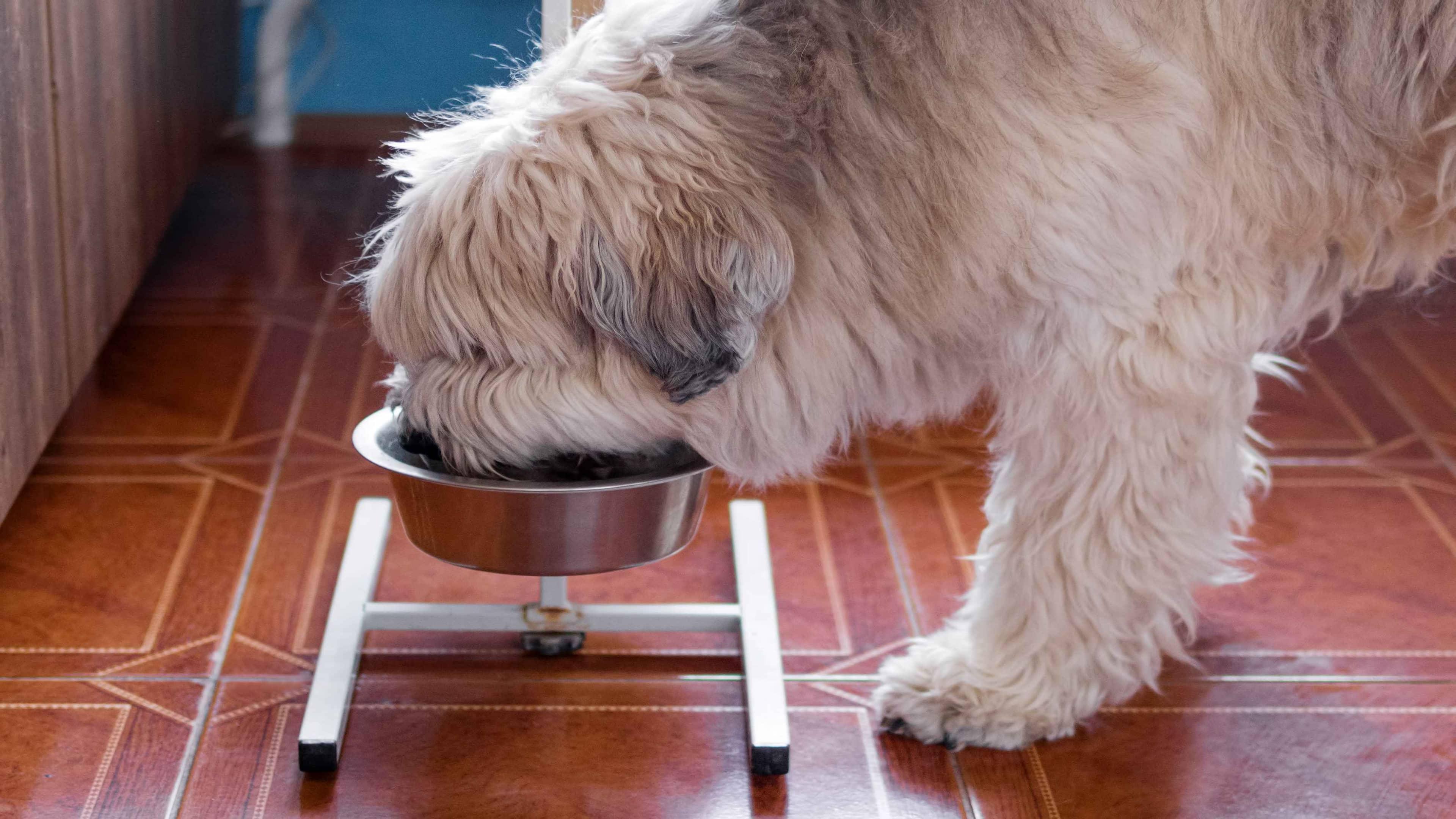
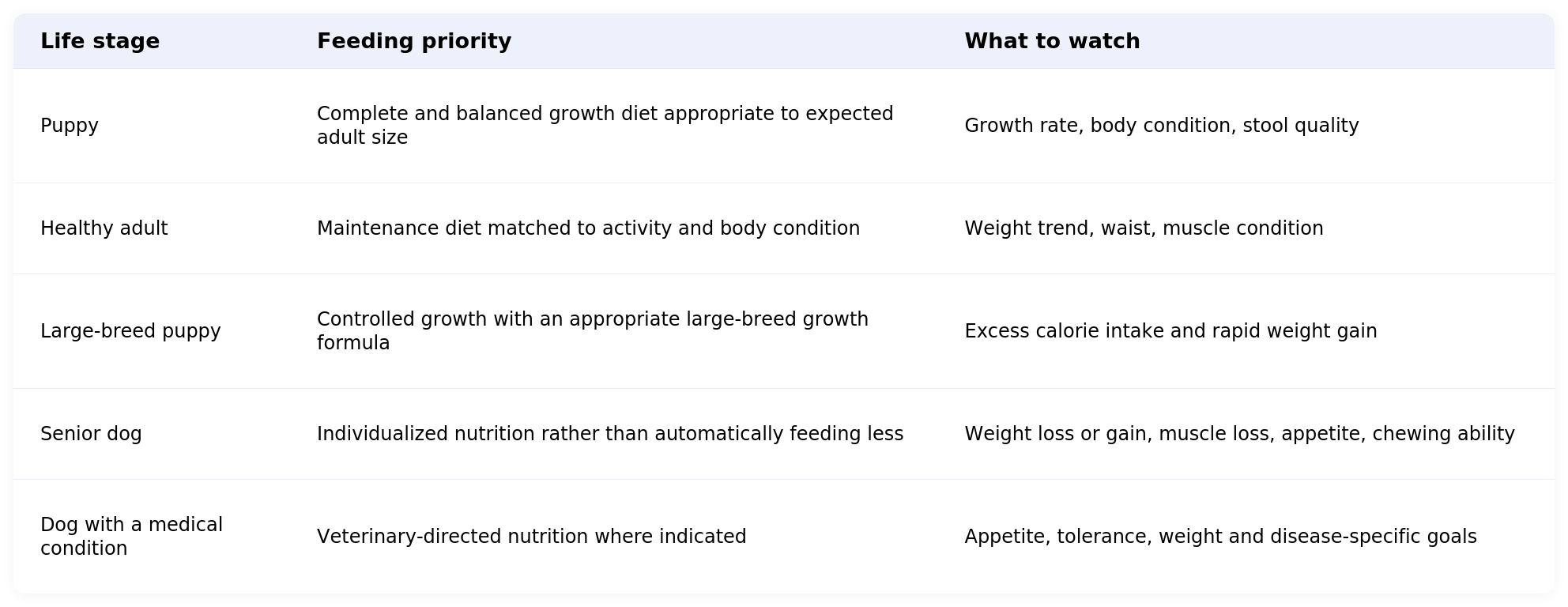
Choose food for the dog in front of you. Age, expected adult size, reproductive status, activity, body condition, and medical history all affect what and how much a dog should eat.
AAHA recommends using calorie information, life stage, body condition, and total daily intake rather than relying on cups alone. Treats, toppers, table food, food used for medication, and supplements all count toward the same calorie budget.
Check the food label for calorie content and nutritional adequacy. Portion the food consistently rather than filling the bowl by eye. AAHA recommends that at least 90% of daily calories come from a complete and balanced diet and no more than 10% from treats and other incomplete foods.
Fresh water should remain accessible unless a veterinarian has specifically instructed otherwise. Dry or tacky gums, lethargy, and reduced skin elasticity are common signs of dehydration. Hoomanely's dehydration guide covers the home checks and when veterinary care is needed in more detail.
For older dogs whose appetite has changed, Hoomanely's senior dog nutrition guide covers feeding decisions in more detail.
Routine Health Care and Vaccines
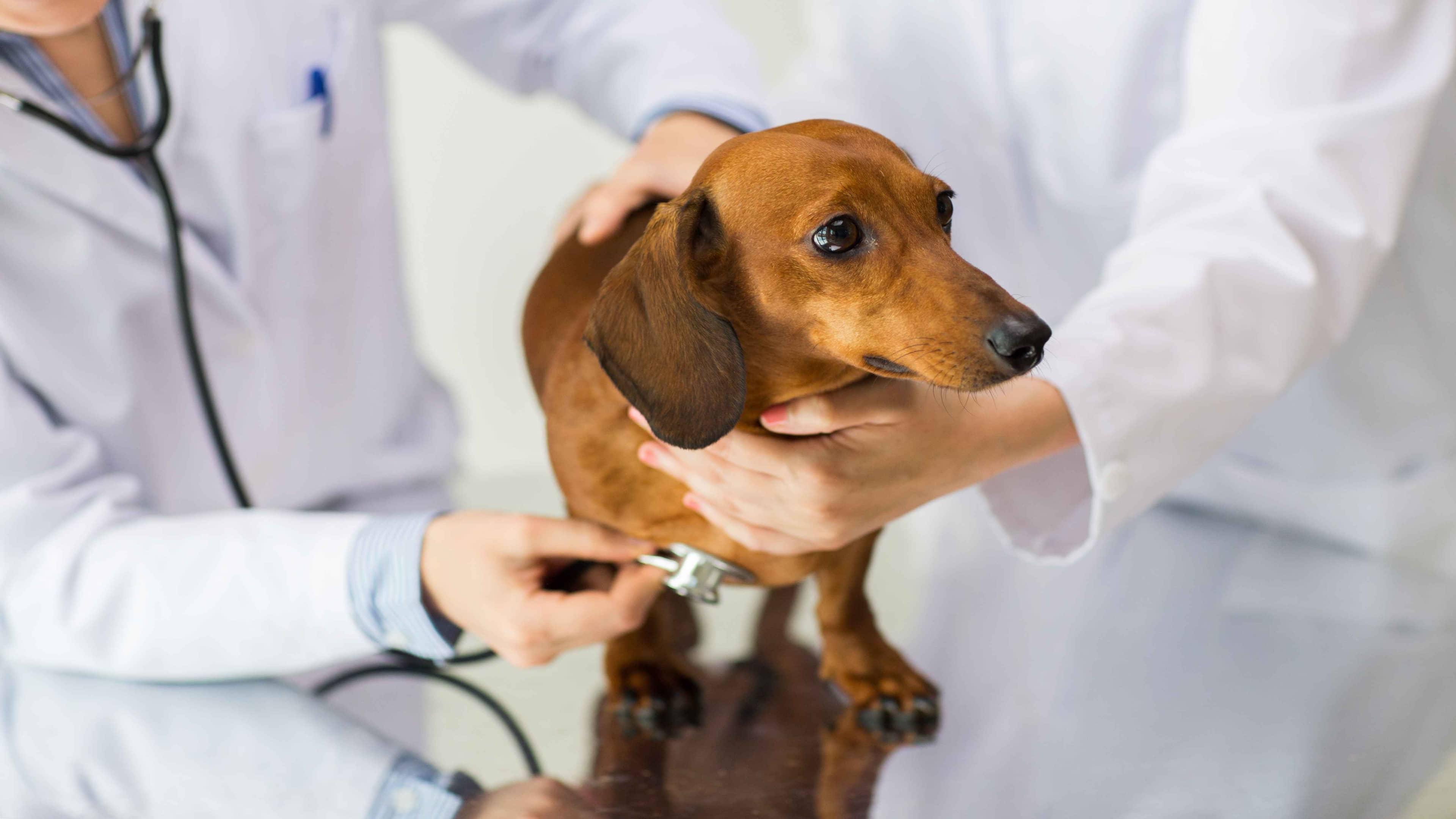
Most dog health care tips come down to one habit: preventive veterinary care that follows life stage and individual risk. Wellness exams create opportunities to assess weight, body and muscle condition, teeth, heart and lungs, skin, mobility, vaccination status, parasite exposure, and behavior before a problem becomes obvious at home.
AAHA notes that diagnostic screening becomes more extensive with age. Its life-stage guidance includes routine bloodwork and urinalysis for mature and senior dogs, with testing frequency individualized according to health and risk.
When to Schedule Vet Visits
Puppies need frequent appointments while their initial examination, vaccine series, parasite care, and growth are being established. Healthy young adults generally need at least an annual wellness visit. Mature dogs may be seen once or twice yearly, while healthy senior dogs often benefit from at least twice-yearly assessment. Individual disease risk can change that schedule.
- Schedule routine care: wellness examination, vaccines, dental review, parasite testing, body-condition assessment, or age-related screening.
- Seek prompt or emergency care: breathing difficulty, collapse, seizures, repeated vomiting with inability to keep water down, significant trauma, suspected poisoning, rapidly worsening weakness, or another acute change that cannot safely wait for a routine appointment.
Basic Vaccination Schedules for Dogs
AAHA divides canine vaccines into core vaccines, recommended broadly unless medically contraindicated, and noncore vaccines, selected according to geography, lifestyle, and exposure risk. Current AAHA core recommendations include distemper, adenovirus, parvovirus, leptospirosis, and rabies.
A general puppy overview:
- Distemper/adenovirus/parvovirus combination: AAHA recommends at least three doses of the distemper/adenovirus/parvovirus combination between 6 and 16 weeks of age, generally 2–4 weeks apart.
- Leptospirosis: two initial doses 2–4 weeks apart, beginning at about 12 weeks under current AAHA guidance.
- Rabies: timing and revaccination must follow applicable state and local law.
- Noncore vaccines: Bordetella, canine influenza, Lyme and others may be recommended according to exposure risk.
Keep a copy of vaccination records and bring them when changing clinics, boarding, traveling, or enrolling in group training.
Keeping Parasites Away All Year Round
Parasite control is not simply a summer task. CAPC recommends year-round broad-spectrum protection against heartworm, intestinal parasites, fleas, and ticks, together with annual heartworm testing in dogs.
- Choose parasite protection with your veterinarian based on age, weight, region and exposure.
- Put recurring doses on a calendar rather than relying on memory.
- If a dose is missed, ask your veterinarian how to restart rather than doubling the next dose yourself.
- Keep recommended testing current even when prevention has been given consistently.
Hoomanely's year-round parasite prevention guide explains fleas, ticks and other parasite risks in more detail.
Exercise, Enrichment, and Behavior
There is no single exercise target that fits every dog. A young working breed, a growing giant-breed puppy, a brachycephalic dog in warm weather, and an older dog with arthritis should not share the same routine.
Build daily movement around age, health, fitness and weather. Walks can include time to sniff rather than functioning only as mileage. Food puzzles, short training sessions, scent games, hide-and-find exercises, and rotating safe toys add mental work on days when outdoor activity is limited.
Predictability matters too. Regular meals, toilet breaks, rest periods and walks can help a dog understand what happens next. Abrupt behavior changes deserve attention rather than being dismissed as stubbornness. Hoomanely's guide to behavior changes that can signal illness explains that connection.
AAHA describes the 3-3-3 rule as a way to set expectations for the first three days, three weeks, and three months after adoption. Treat it as a rough adjustment framework rather than a deadline, because individual dogs may settle faster or take considerably longer.
Puppy socialization follows a different clock. The American Veterinary Society of Animal Behavior identifies the first three months of life as the primary socialization period and supports carefully managed social exposure before the vaccination series is fully complete. Experiences should be safe, positive and not overwhelming.
At-home Care and Grooming Tips
Routine grooming is useful because you repeatedly see and touch the same areas of your dog's body. That makes small changes easier to notice.
A practical weekly checklist:
- Brush the coat and inspect the skin. Look for new lumps, redness, parasites, scabs, hair loss or painful areas.
- Check paws and nails. Trim nails as needed and inspect pads and spaces between the toes.
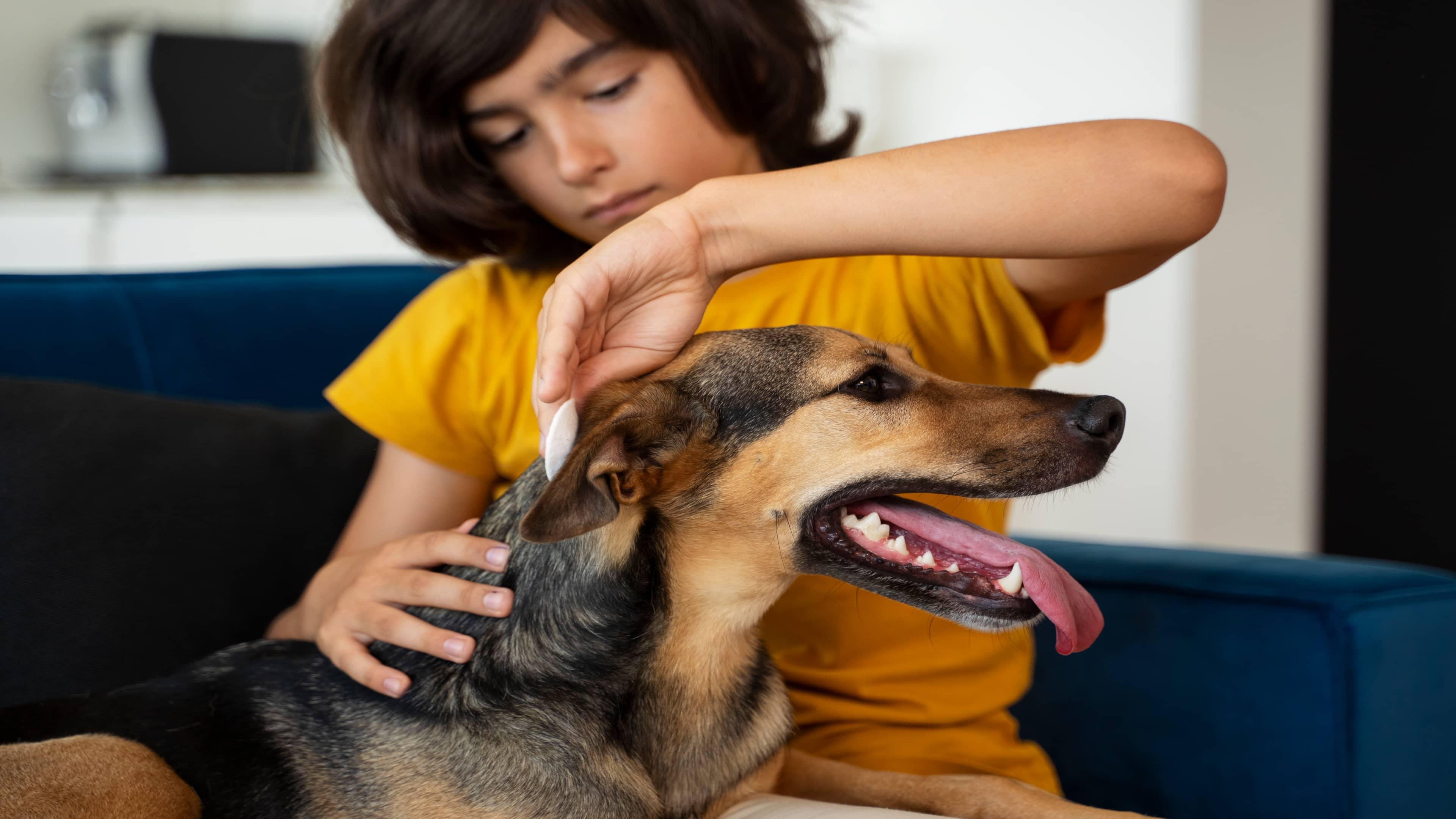
- Look at the ears. Redness, odor, discharge, repeated head shaking or pain deserves veterinary attention.
- Check the eyes. New redness, squinting, cloudiness, swelling or discharge should not be ignored.
- Look inside the mouth. Watch for bad breath, red gums, broken teeth, oral masses or difficulty chewing.
- Brush the teeth daily where possible. AAHA states that brushing needs to be done daily to provide meaningful plaque control.
For a dog that resists a toothbrush, ask your veterinarian about dental wipes, appropriate dental diets, water additives, or products accepted by the Veterinary Oral Health Council. Those options can support oral care, but they do not eliminate the need for veterinary dental examination.
Safety, Identification, and Traveling with Your Dog
Preventable hazards deserve the same attention as diet and exercise.
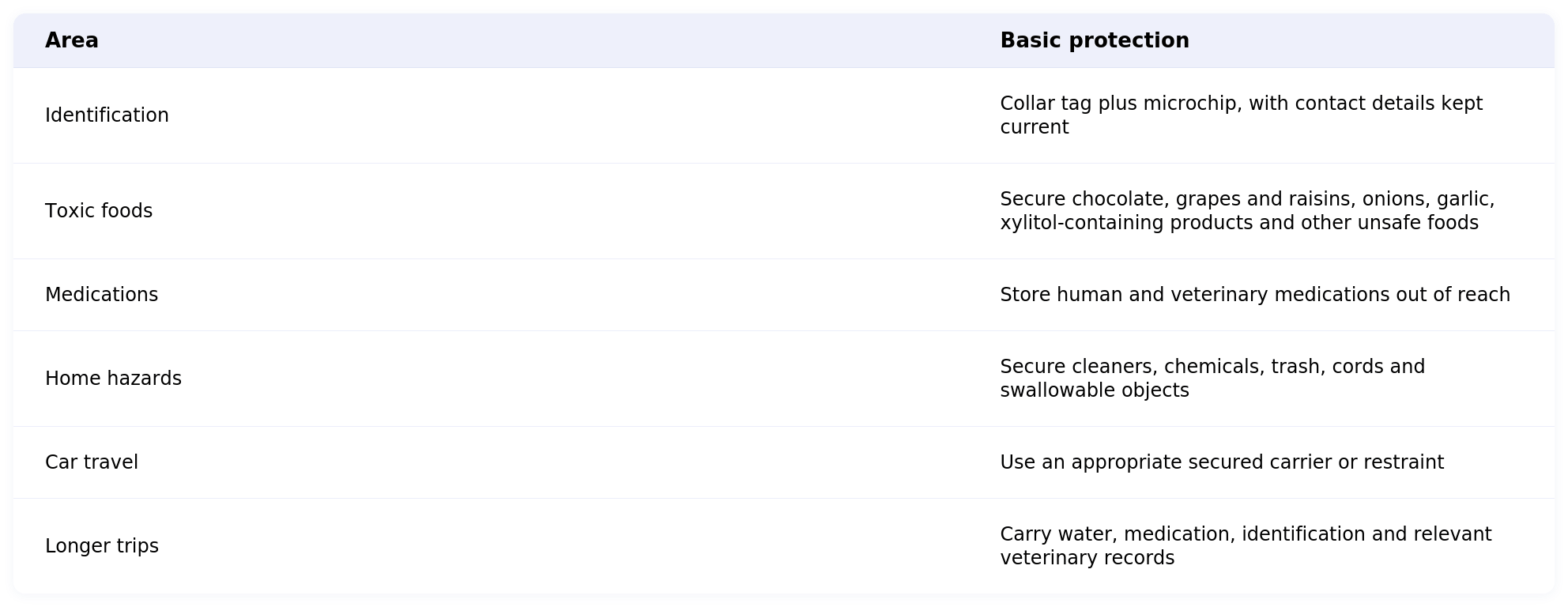
ASPCA warns that grapes and raisins can cause kidney injury, while xylitol can cause hypoglycemia and potentially liver damage in dogs. Onion, garlic and related Allium plants can damage red blood cells.
If your dog may have eaten a toxic food or substance, contact your veterinarian and the ASPCA Animal Poison Control Center at (888) 426-4435. Do not wait for symptoms to appear.
Travel routines should stay simple. Secure the dog in the vehicle, plan water and rest stops, keep medication accessible, and check destination requirements before interstate or international travel.
Early Puppy Care and Development
The most useful puppy care tips group into several jobs happening at once: support growth, build safe social experience, establish predictable routines, complete preventive medical care, and notice illness quickly.
Feeding Your Puppy and Staying on Top of Vaccines
Feed a complete and balanced growth diet formulated for the puppy's expected adult size. Portion changes should follow growth, body condition and the calorie density of the food rather than simply making each meal larger as the puppy ages.
- Reassess portions as body weight and growth change. Large-breed puppies need particular protection from excessive calorie intake.
- AAHA recommends at least three doses of the distemper/adenovirus/parvovirus combination vaccine between 6 and 16 weeks of age, given 2–4 weeks apart.
Puppy Training and Socialization Basics
Training should make daily life easier, not overwhelm a young dog with a long command list.
Start with:
- toilet routine and supervision
- responding to the name
- simple cues such as sit and come
- calm handling of paws, ears and mouth
- comfortable leash and harness exposure
During the first three months, safely introduce different people, surfaces, household noises, handling, travel experiences and suitable healthy dogs without forcing interaction. AVSAB emphasizes positive exposure without fear or overstimulation.
For adopted puppies or adults that need more time to settle, Hoomanely's clinical handbook for building trust after adoption provides a more detailed transition framework.
When to Take Your Puppy to the Vet
Young puppies can deteriorate faster than healthy adults. Contact your veterinary team promptly for:
- repeated vomiting or diarrhea
- refusal to eat combined with weakness or lethargy
- breathing difficulty
- collapse, seizures or marked unresponsiveness
Routine follow-ups are also important while vaccinations, growth, parasite care and development are being established. AAHA notes that puppies commonly require repeated veterinary visits during the first several months rather than a single initial examination.
How EverBowl™ Supports Everyday Pet Care
Much of everyday dog care depends on recognizing change. Breakfast is suddenly unfinished. Drinking looks different for several days. Appetite falls at the same time the dog becomes quieter. In a busy household, those details are easy to reconstruct poorly after the fact.
Hoomanely EverBowl™ learns a dog's normal eating and drinking patterns and recognizes when they move away from that dog's individual baseline.
Where that Context Can Help:
- adds a longitudinal eating and drinking history to the owner's observations
- makes it easier to describe when a change began and how it developed
- gives a veterinarian more context alongside symptoms, medications, weight and behavior
EverBowl does not diagnose illness, identify the cause of a change, or replace hands-on care and veterinary examination. The value is the record. For pet parents building a repeatable care routine, it can add context to the eating and drinking changes they are already being asked to notice.
Conclusion
The most useful dog care tips are not complicated. Feed appropriately, keep water available, move your dog every day, protect against preventable disease and parasites, care for the teeth and coat, make the home safe, and learn the routines that are normal for that individual dog.
Preventive care works best when daily observations and veterinary guidance support each other. Pick one habit this week that is currently inconsistent, whether that is daily toothbrushing, measuring treats, updating the microchip record, or putting parasite prevention on the calendar, and make it routine.
FAQs
1.What is the 3-3-3 Rule for New Pets?
AAHA describes the 3-3-3 rule as an adoption-adjustment framework covering roughly the first three days, three weeks, and three months in a new home. It is not a medical or behavioral deadline. Some dogs adjust faster, while fearful, undersocialized, or previously stressed dogs may need much longer.
2.What Common Household Items are Dangerous for Dogs?
Chocolate, grapes and raisins, xylitol-containing products, onions, garlic, medications and some household chemicals can cause serious poisoning. ASPCA specifically warns about grapes and raisins, Allium foods such as onions and garlic, and xylitol. If poisoning is suspected, contact your veterinarian or ASPCA Animal Poison Control at (888) 426-4435.
3.Can I Stop Flea and Tick Prevention During the Winter?
Not simply because the weather is cooler. CAPC recommends year-round broad-spectrum parasite protection for dogs, including protection against fleas, ticks, heartworm and intestinal parasites. Your veterinarian can adapt the product choice to regional exposure and your dog's health.
4.How Do I Recognize Pain If My Dog is Not Limping?
Pain can show up as reluctance to move, difficulty getting comfortable, altered sleep, withdrawal, irritability, reduced appetite, hesitation on stairs, or resistance to being touched. A new behavior change deserves veterinary assessment when it persists or appears with another physical sign.
5.What is the Difference Between Core and Noncore Vaccines?
AAHA defines core vaccines as those recommended for all dogs unless there is a specific medical reason not to vaccinate. Noncore vaccines are selected according to lifestyle, geography and exposure risk. Current AAHA guidance classifies distemper, adenovirus, parvovirus, leptospirosis and rabies as core vaccines for dogs.
6.How Often Should I Brush My Dog's Teeth at Home?
Daily brushing is the target. AAHA states that brushing needs to be performed daily to provide meaningful plaque control, although professional dental evaluation may still be needed. If brushing is difficult, ask your veterinarian about evidence-based alternatives such as appropriate dental wipes, diets, chews or water additives.