Fever in Dogs: Symptoms, Causes, Treatment & When to Visit the Vet
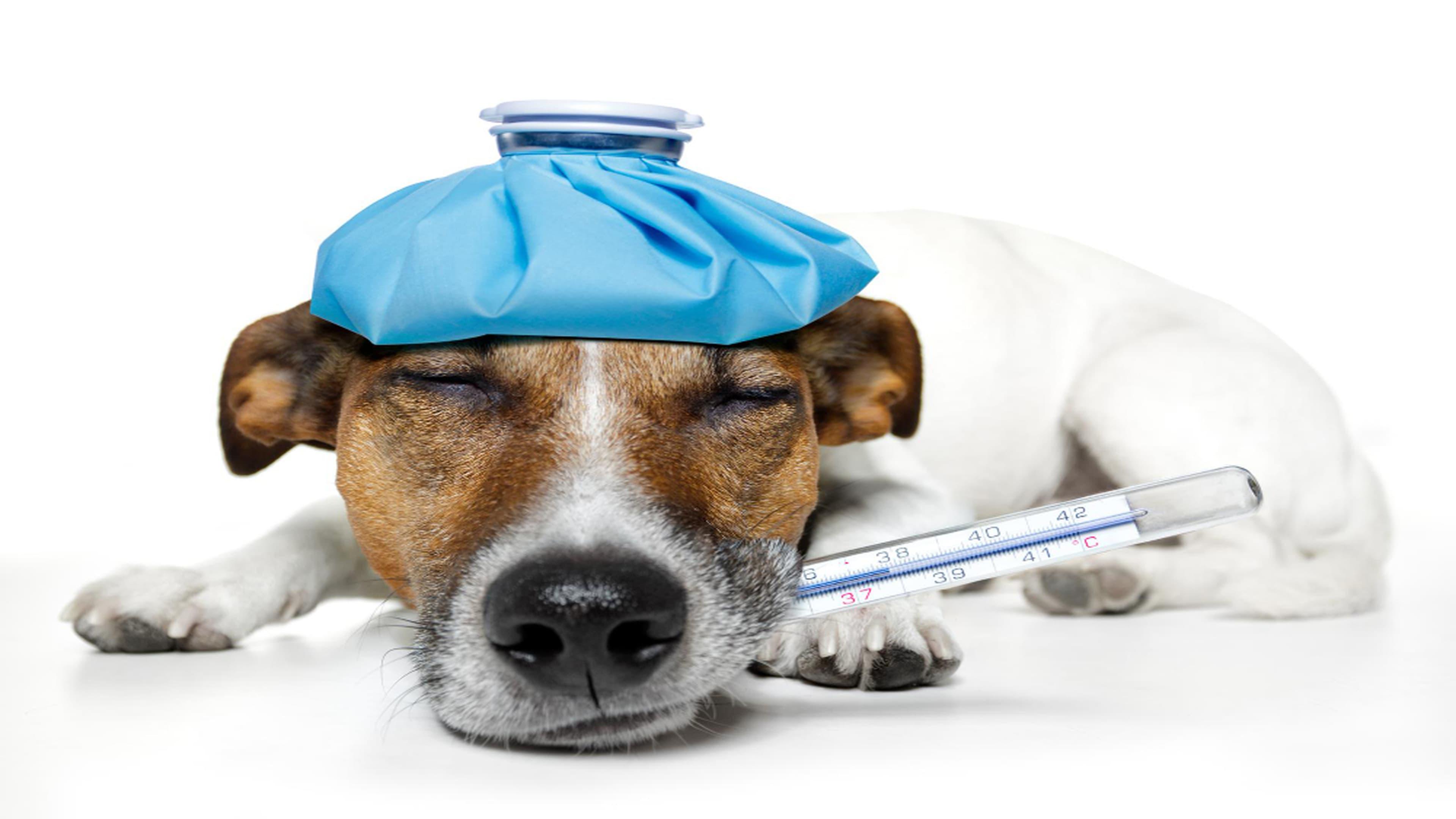
Fever in dogs means the body has raised its internal temperature in response to inflammation, infection, or another underlying process. A normal canine temperature is roughly 99.5–102.5°F, while 103°F or higher is generally treated as abnormal enough to warrant veterinary guidance. The Merck Veterinary Manual notes that temperatures near 106°F or higher can cause serious systemic complications and require emergency care.
Fever is a sign, not a diagnosis. Lethargy, appetite loss, shivering, increased breathing rate, and dehydration often appear with it, but temperature measurement is what confirms the problem.
The Short Version
- A dog's normal temperature is about 99.5–102.5°F. A reading of 103°F or higher is abnormal enough to contact your veterinarian.
- The most reliable way to confirm fever in dogs at home is a digital rectal thermometer. A warm nose, ears, or belly cannot confirm fever.
- Fever is a symptom rather than a diagnosis. Infection, inflammation, immune-mediated disease, cancer, and sometimes a recent vaccination may be responsible.
- Heatstroke can also cause a dangerously high temperature, but it is hyperthermia rather than true fever because the body's temperature-regulating set point has not been reset.
Signs of Fever in Dogs
A sick dog and fever often go together, but the earliest symptoms of a sick dog are usually behavioral: lethargy, reduced appetite, less movement, or withdrawal. These signs are nonspecific, so temperature measurement is needed to confirm fever.
Common fever symptoms in dogs include:
- Lethargy or unusual tiredness
- Loss of appetite
- Reluctance to walk, play, or get up
- Hiding or withdrawing from family
- Shivering or trembling
- Faster breathing or excessive panting
- Increased heart rate
- Warm-feeling ears, head, or abdomen
- Red or glassy-looking eyes
- Dehydration or tacky/dry gums
- Vomiting or diarrhea
- Stiffness or signs of discomfort
- Coughing, nasal discharge, or other signs when respiratory infection is involved
VCA lists lethargy, anorexia, shivering, increased respiratory rate, and dehydration among the most common fever symptoms in dogs.
Symptoms of Fever in Puppies
Puppies need a lower threshold for veterinary assessment.
Watch for poor appetite or nursing, weakness, vomiting, diarrhea, excessive crying, abnormal breathing, poor weight gain, or marked lethargy. Very young puppies deserve particular caution because their temperature regulation differs from that of mature dogs. Some serious neonatal infections can actually occur without a fever, so a sick newborn puppy should not be considered safe simply because the thermometer is normal. Merck notes, for example, that canine herpesvirus can cause severe illness in neonatal puppies with weakness, poor nursing and diarrhea despite the absence of fever.
Contact your veterinarian promptly if a puppy:
- Stops eating or nursing
- Becomes markedly weak or difficult to wake
- Has repeated vomiting or diarrhea
- Has trouble breathing
- Cannot stand normally
- Shows a clearly abnormal temperature
- Appears to be getting worse over a few hours
What Causes Fevers in Dogs?
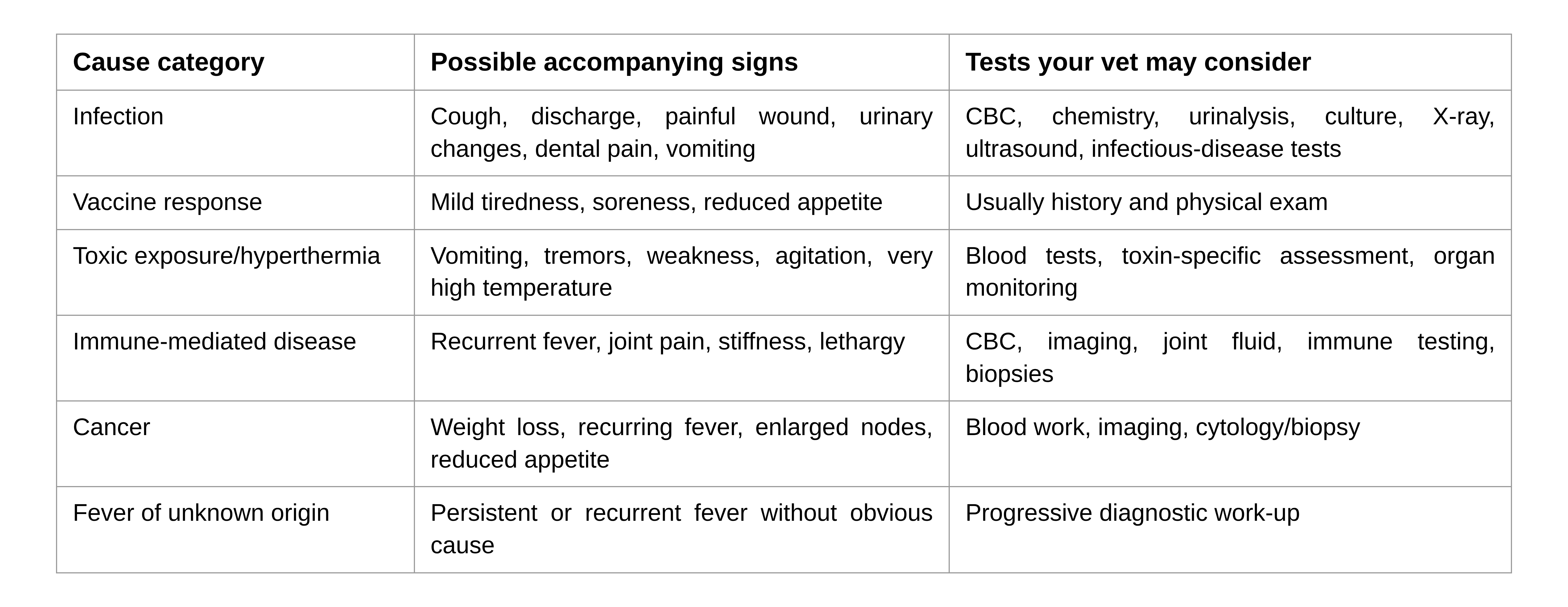
Fever begins when inflammatory signals reset the hypothalamus, the brain's temperature-control center, to a higher set point. Infection is common, but immune-mediated disease, some drugs or vaccines, and cancer can also cause fever.
Infections
Bacterial, viral, fungal, and some parasitic infections can trigger fever.
The source may be obvious, such as an infected skin wound or abscess. Other infections are hidden. Pneumonia, urinary tract infection, dental infection, tick-borne disease, and infections involving internal organs can all produce signs of fever alongside other clues. Respiratory infection may bring coughing or nasal discharge; an infected wound may be swollen and painful; urinary disease may change urination habits.
Your veterinarian may need blood work, urine testing, cultures, imaging, PCR, or serology to identify the organism. Cultures can be particularly useful when antibiotics need to be selected against a specific bacterial infection.
Vaccines and Immune Response
A mild, short-lived fever can occur after vaccination because the immune system is responding to the vaccine. Mild lethargy, temporary appetite reduction, soreness at the injection site, and low-grade fever are recognized post-vaccination effects.
After vaccination:
- Monitor mild symptoms closely during the first day.
- Contact your veterinarian if signs persist beyond the expected short post-vaccination period, worsen, or are more than mild.
- Seek urgent care for facial swelling, breathing difficulty, collapse, repeated vomiting, or another severe reaction.
Most mild vaccine reactions resolve without specific treatment, but tell your veterinarian what happened so it is documented before future vaccinations.
Toxins and Heatstroke
Heatstroke can produce a dangerously high temperature, but it is not a true fever. The body's set point remains normal; heat accumulates faster than the dog can lose it. Heavy panting, weakness, collapse, abnormal gums, vomiting, or neurologic signs after heat exposure require emergency care.
If you believe your dog has ingested something toxic, call the ASPCA Animal Poison Control Center at (888) 426-4435 immediately. Do not wait for symptoms to appear.
Autoimmune Disease and Cancer
Immune-mediated disease and some cancers can cause persistent or recurrent fever. When initial testing does not identify infection, veterinarians may expand the workup to joint-fluid analysis, imaging, cytology, or biopsy depending on the clinical signs.
How to Check Your Dog's Temperature
Touch cannot confirm fever. Measure the temperature.
A digital rectal thermometer gives the most dependable home reading. PetMD and VEG both recommend rectal measurement for confirming fever.
Use these numbers as a practical guide:
- About 99.5–102.5°F: normal resting range
- Around 103°F or above: contact your veterinarian
- 104°F+: same-day veterinary assessment
- 106°F+: emergency
These thresholds are consistent with guidance from the Merck Veterinary Manual's normal temperature reference ranges.
How to Take a Dog's Temperature
If your dog is calm and you can handle them safely:
- Use a digital thermometer reserved for your pet.
- Apply petroleum jelly or a pet-safe lubricant to the tip.
- Ask another adult to gently steady your dog's front end.
- Insert only the lubricated tip far enough to obtain a reading, following the thermometer manufacturer's instructions.
- Hold it in place until it signals that the reading is complete.
- Remove it carefully, record the temperature, and clean the thermometer thoroughly afterward.
Stop if your dog struggles, cries, tries to bite, or appears painful. Do not risk injury to either of you. A veterinary clinic can take the temperature safely if your dog is reactive or you are uncomfortable doing it yourself.
Home Care and When to See a Vet
The safest response depends on the number on the thermometer and how your dog is behaving.
- Below 103°F + mild signs + otherwise stable: observe closely and contact your vet if symptoms persist or worsen
- 103°F+: contact veterinarian
- 104°F+: same-day veterinary assessment
- Temperature of 106°F or higher: Emergency assessment
While waiting for veterinary guidance, keep water available and let your dog rest. Do not force food or water.
Do not give ibuprofen, acetaminophen, naproxen, aspirin, or any other human pain or fever medicine unless your veterinarian specifically tells you to.
Emergency Indicators
Go to an emergency clinic immediately if your dog has:
- Temperature of 106°F or higher
- Seizures
- Collapse or inability to stand
- Difficulty breathing
- Severe weakness or unresponsiveness
- Persistent vomiting or diarrhea with deterioration
- Suspected poisoning
- Signs of heatstroke
- Pale, blue, or markedly abnormal gums
- Rapid worsening alongside a high temperature
How Hoomanely EverBowl™ Helps Identify Changes During Illness
Fever often changes more than temperature. Appetite may fall, drinking may shift, and those changes can begin before the veterinary visit.
EverBowl understands food intake and hydration patterns against the dog's established baseline. It does not diagnose fever or identify its cause. The value is the record. A dated intake trend can sit alongside your temperature readings, medication history, vomiting, diarrhea, and behavior notes when you speak with your veterinarian.
Bring the trend, not just the day. A progressive change over several days is easier to interpret than a vague recollection that your dog “hasn't been eating normally.”
Conclusion
Fever in dogs is a sign that deserves context, not a diagnosis you should try to make from a warm nose. Check your dog's temperature properly if they are lethargic, eating less, shivering, or showing other symptoms of a sick dog.
FAQs
1. Can a dog recover from a fever on its own?
Sometimes, depending on the cause. Mild post-vaccination fever may resolve on its own, while infection, immune-mediated disease, or cancer can produce persistent or recurrent fever.
2. What can I give my dog for a fever?
Do not give human fever medicine unless your veterinarian explicitly prescribes or recommends it for your dog. Ibuprofen, acetaminophen, naproxen, aspirin, and other human medications can cause serious toxicity. Offer fresh water and contact your veterinarian so the underlying cause can be assessed.
3. How long does a typical dog fever last?
There is no single normal duration because fever lasts according to its cause. A mild vaccine-related reaction may settle within roughly a day, whereas infectious, immune-mediated, or cancer-related fever can persist or recur. VCA considers a persistent high fever lasting more than 48 hours serious and potentially life-threatening. Do not wait that long if the dog is already very unwell.
4. Can you tell if a dog has a fever by touch?
No. Warm ears, a hot belly, or a dry nose may make you suspicious, but they cannot confirm fever. If you are wondering how to tell if a dog has a fever, a properly taken digital rectal temperature is the standard practical method for confirming it at home.
5. What is the fastest way to bring a dog's fever down?
Do not focus on rapidly lowering the number without knowing why it is high. In true fever, the body has deliberately raised its temperature set point, and aggressive cooling is not automatically appropriate. Contact your veterinarian, provide water if your dog can drink normally, and treat the underlying condition according to veterinary guidance.