Dehydration in Dogs: Signs, Causes, Treatment & When to See a Vet
Dehydration occurs when a dog loses more water and electrolytes than they replace. AKC uses about 1 ounce of water per pound of body weight per day as a general benchmark for a healthy adult dog, roughly 50 to 60 mL per kilogram, although individual needs vary. Dehydration occurs when fluid losses exceed intake.
Mild fluid loss may improve when an otherwise alert dog can drink normally, but persistent vomiting or diarrhea, marked weakness, sunken eyes, abnormal gums, collapse, or an inability to keep water down needs veterinary care. Severe dehydration can impair circulation and organ function.
Treating dehydration in dogs depends on severity and cause. Oral water may be appropriate when the dog is alert and able to drink, while veterinary treatment may use enteral, subcutaneous, or IV fluids. Hypovolemia, where circulating blood volume is inadequate, requires intravascular fluid support.
The Short Version
- Dehydration develops when fluid losses exceed intake. Vomiting, diarrhea, fever, heat exposure, excessive panting, poor water intake, and some diseases can all contribute.
- Dry or sticky gums, reduced skin elasticity, thick saliva, lethargy, and sunken eyes are common signs of dehydration in dogs. No single home test confirms the diagnosis.
- AKC gives about 1 ounce of water per pound of body weight per day as a general reference for a healthy adult dog, roughly 50 to 60 mL per kilogram.
- Puppies can dehydrate quickly. Vomiting, diarrhea, poor drinking, weakness, or tacky gums in a young puppy deserves a lower threshold for veterinary assessment.
Treating Dehydration in Dogs
The safest treatment depends on whether the dog can drink and whether significant illness is causing the fluid loss. An alert dog with mild fluid loss and no vomiting may be able to rehydrate orally. A dog that cannot drink, repeatedly vomits, is severely dehydrated, or shows signs of poor circulation needs veterinary fluid therapy. AAHA recommends choosing the fluid route according to the severity of the deficit and the patient's ability to tolerate oral intake.
For a dog that remains bright, can swallow normally, and is not repeatedly vomiting:
- Move them to a cool, quiet environment if heat or exercise contributed.
- Keep fresh, cool water available.
- If drinking too quickly triggers nausea, ask your veterinarian whether offering smaller amounts more frequently is appropriate.
- Wet food or water added to food can contribute fluid when the dog is willing to eat.
- Use an oral electrolyte product only if your veterinarian recommends the specific product and amount. Human electrolyte products are not automatically appropriate for dogs.
Do not force water by syringe into a weak, nauseated, or poorly responsive dog. Aspiration is a risk when swallowing is impaired.
Do not improvise with sports drinks or sugar-free drink mixes. Products made for people vary in sodium, sugar, and sweetener content. Xylitol, found in some sugar-free products, can cause severe hypoglycemia and liver injury in dogs.
If xylitol ingestion is suspected, contact your veterinarian and the ASPCA Animal Poison Control Center at (888) 426-4435 immediately.
Signs of Dehydration in Dogs
Dehydration symptoms in dogs reflect both loss of body water and the underlying problem causing it. Early findings can be subtle. More severe dehydration can affect circulation, alertness, and organ function.
Physical findings that can accompany dehydration:
- dry or tacky gums
- thick saliva
- reduced skin elasticity
- sunken eyes
- lethargy
- weakness
Signs that often accompany or contribute to fluid loss:
- vomiting
- diarrhea
- fever
- excessive panting
- poor drinking
AKC lists loss of skin elasticity, lethargy, panting, sunken eyes, sticky gums, thick saliva, appetite loss, and vomiting among common signs of canine dehydration.
Emergency Signs Include:
- collapse
- severe weakness or unresponsiveness
- pale, white, blue, or markedly abnormal gums
- weak pulses or signs of poor circulation
- repeated vomiting with inability to keep water down
- suspected heatstroke
- rapidly worsening mental status
Severe dehydration may occur alongside hypovolemic shock. AAHA estimates that clinical findings become progressively more obvious as dehydration increases, but also cautions that physical signs vary considerably between patients.
Behavior can change before the full clinical picture is obvious. Persistent withdrawal, loss of appetite, or an abrupt reduction in normal activity should be considered alongside physical findings. See Hoomanely's guide to behavioral changes as early signs of illness.
What Causes Dehydration in Dogs?
Dehydration is a fluid-balance problem, not a diagnosis by itself.
Common causes include:
- inadequate access to water
- reduced drinking during illness
- vomiting
- diarrhea
- fever
- excessive panting or heat exposure
- prolonged activity
- increased urine loss
- kidney disease
- diabetes
- other illnesses that alter water balance
Vomiting and diarrhea can be especially important because the dog is losing fluid while potentially becoming less able or willing to replace it. Diabetes and kidney disease can create a different pattern, where increased urination drives greater water loss.
This is why rehydration alone is not always enough. The cause of the fluid loss needs to be identified if dehydration persists or returns.
How to Check for Dehydration and Triage at Home
Home checks can tell you whether hydration deserves attention. They cannot reliably grade dehydration or replace an examination.
Skin Tenting Test
Gently lift a fold of skin over the shoulder area and release it. In a well-hydrated dog, the skin returns quickly to its normal position. Delayed recoil can occur with dehydration.
Interpret it carefully. Skin elasticity varies with age, body condition, and breed. Wrinkled breeds can have slower recoil even when well hydrated, while older animals may have reduced skin elasticity for reasons unrelated to dehydration. Establishing what is typical when your dog is healthy makes comparison more useful.
This is the same logic behind establishing a personal health baseline rather than relying on one isolated observation. Hoomanely discusses that principle in its article on why baseline data matters in evidence-based veterinary medicine.
Gum and Saliva Check
Lift the lip and touch the gums. Healthy gums are normally moist. Dry or tacky gums can occur with dehydration, and saliva may become thicker as fluid deficit increases.
Do not use gum moisture alone to diagnose dehydration. AAHA notes that dry mouth can also occur in some kidney patients without dehydration.
Capillary Refill Time
Press a finger gently against pink gum tissue until it blanches, then release. The color should return as blood refills the capillaries.
Merck lists:
- 1–2 seconds: normal perfusion
- more than 2 seconds: poor perfusion or peripheral vasoconstriction
- Less than 1 second: a hyperdynamic state that can occur with fever, heatstroke, distributive shock, or the early compensatory stage of hypovolemic shock.
A prolonged capillary refill time is not a dehydration test by itself. It is a perfusion finding. If it occurs with lethargy, abnormal gum color, weakness, vomiting, or other signs of illness, seek veterinary care.
Fast Rehydration Methods for Dogs
There is no safe shortcut for severe dehydration. The fastest appropriate route depends on the dog's circulation, fluid deficit, and ability to drink. AAHA specifically recommends tailoring fluid route and volume to the individual patient rather than using a one-size-fits-all protocol.
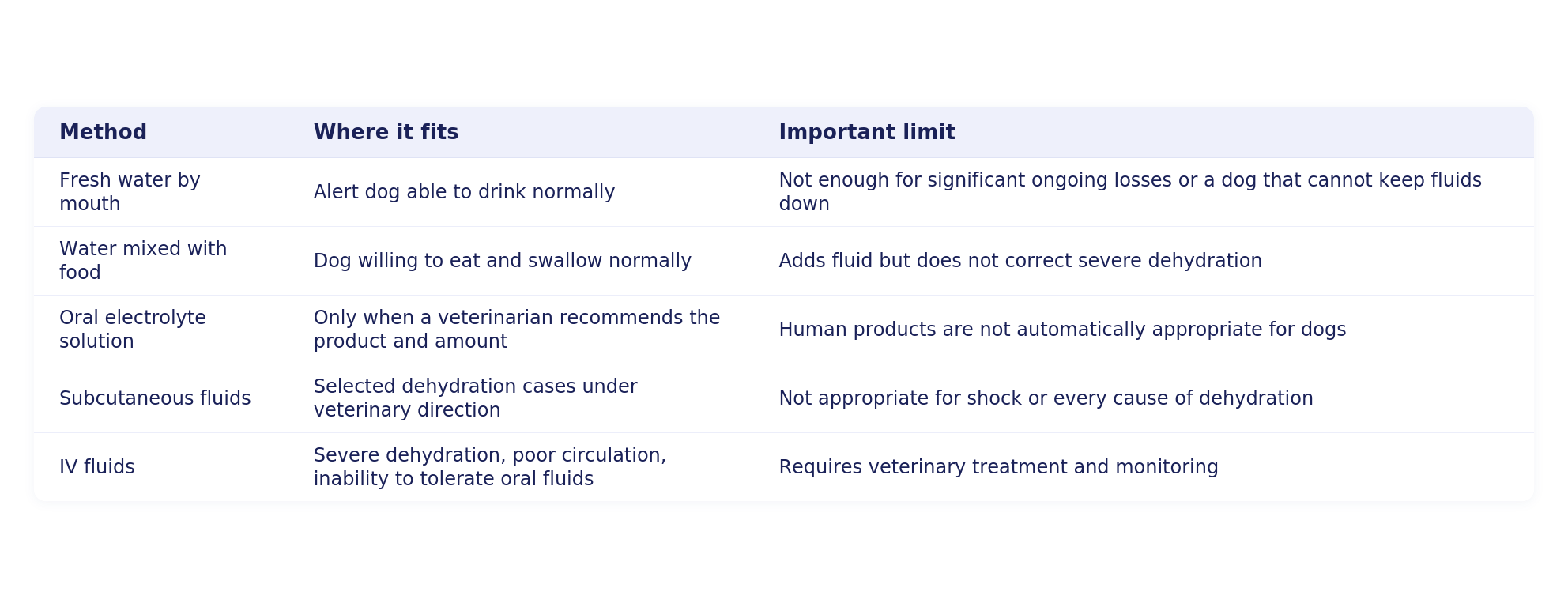
AAHA notes that dehydration can be corrected through enteral, subcutaneous, IV, or combined routes. Severe dehydration or inability to tolerate oral intake favors IV therapy.
Avoid judging success by an arbitrary number of hours. Improvement depends on the size of the fluid deficit and whether losses are continuing. In veterinary patients, AAHA commonly plans replacement of a dehydration deficit over 12–24 hours, with repeated reassessment. That is a clinical treatment window, not a recommendation to wait 12–24 hours at home.
When to Seek Veterinary Treatment for Dehydration in Dogs
Go to a veterinary clinic promptly if your dog has clear dehydration signs plus ongoing vomiting, diarrhea, weakness, poor intake, or another illness. Emergency care is appropriate for collapse, altered responsiveness, markedly abnormal gums, suspected heatstroke, or signs of shock.
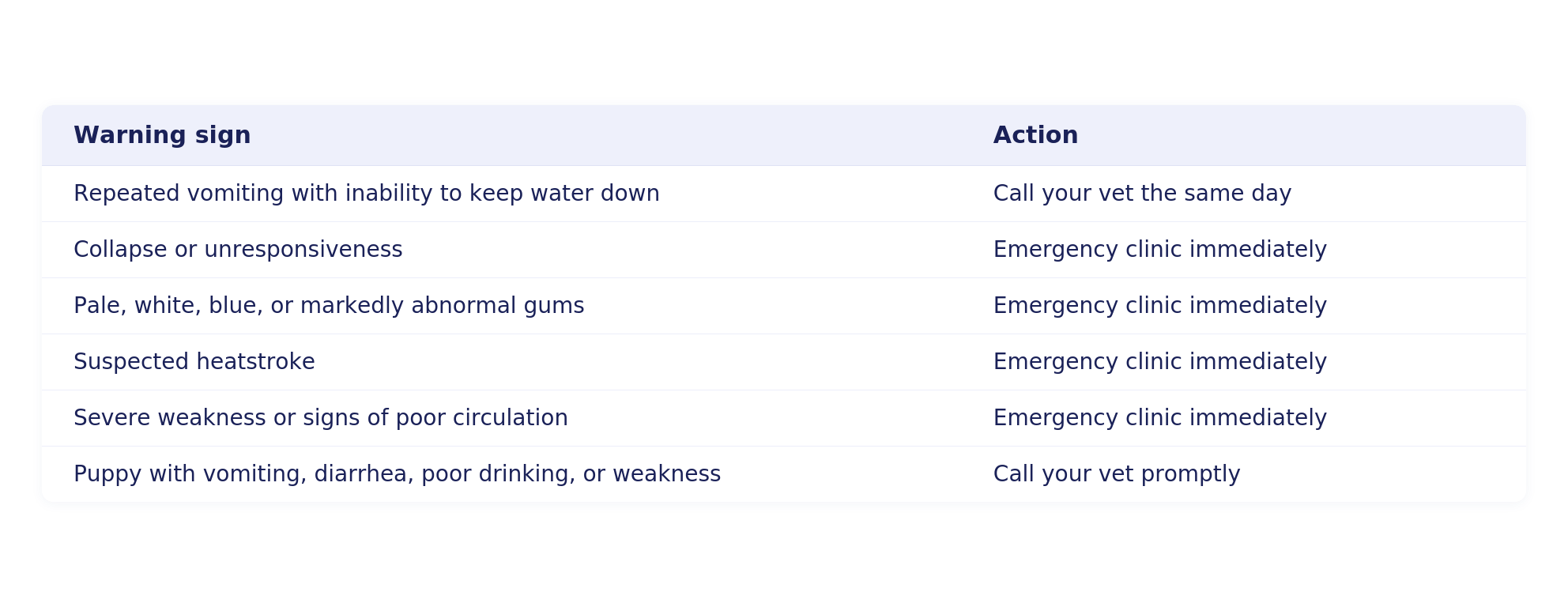
Veterinary treatment has two jobs: replace the missing fluid and identify why it was lost.
AAHA distinguishes dehydration from hypovolemia. Dehydration is loss from the body's fluid spaces. Hypovolemia is inadequate circulating blood volume and can compromise tissue perfusion. Hypovolemia requires IV or intraosseous fluids rather than relying on oral or subcutaneous replacement.
Depending on the presentation, a veterinarian may use:
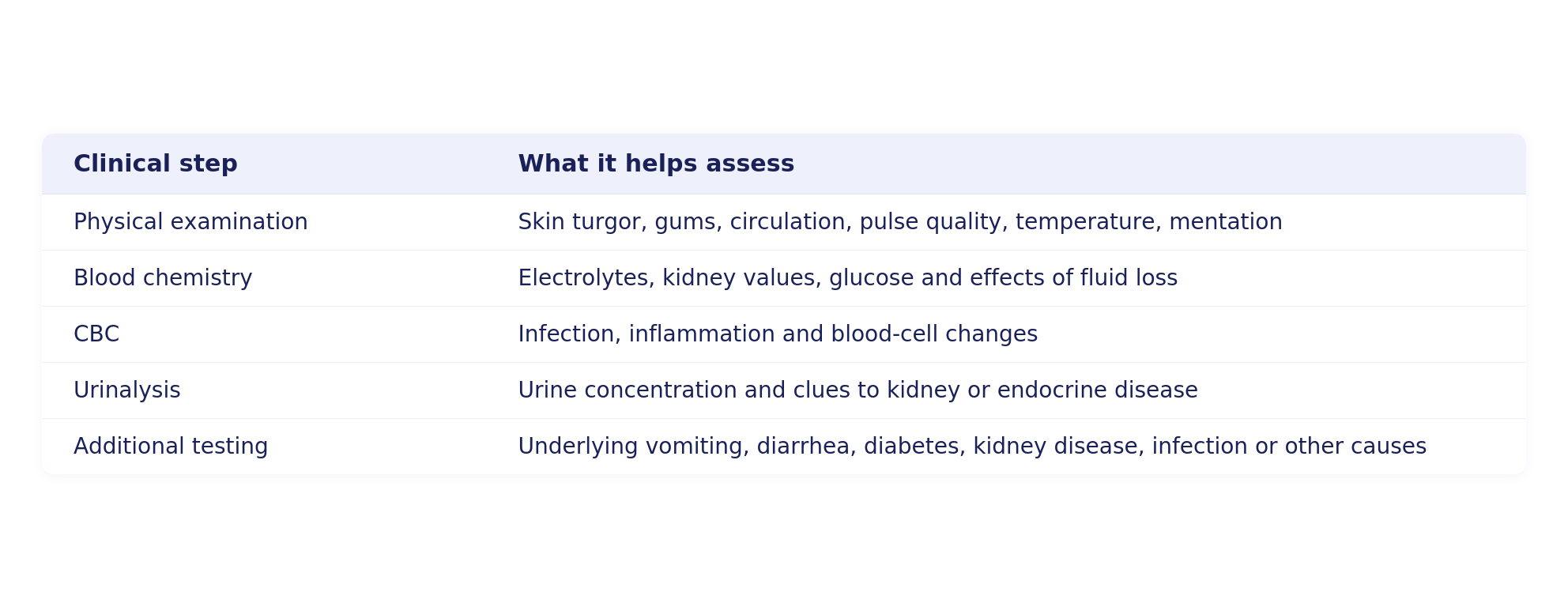
Subcutaneous fluids may be sufficient in selected stable patients. IV fluids are preferred for severe dehydration and for dogs unable to tolerate oral fluids. Fluid therapy must also be monitored because excessive or inappropriate fluid administration can cause complications.
Persistent thirst or fluid loss can also point to an underlying disease rather than a simple hydration problem. See Hoomanely's guide to early signs and long-term care for canine diabetes.
Preventing Dehydration with Daily Habits
Hydration needs change from day to day. Weather, exercise, diet, health, life stage, and milk production can all affect how much water a dog needs.
AKC uses about 1 ounce of water per pound of body weight per day as a general reference for healthy adult dogs, roughly 50 to 60 mL per kilogram. Treat that as a reference point, not a diagnostic cutoff.
Five useful habits:
- Keep fresh water continuously available unless a veterinarian has given different instructions.
- Use more than one accessible water station when the home is large or mobility is limited.
- Bring water on walks, hikes, travel, and hot-weather outings.
- Consider wet food or adding water to food if your veterinarian agrees and your dog benefits from additional dietary moisture.
- Learn the dog's usual drinking pattern so a sustained change is easier to describe.
Puppy dehydration deserves closer attention. VCA notes that very young puppies can become dehydrated quickly when liquid intake is irregular or inadequate. Persistent vomiting, diarrhea, poor nursing or drinking, tacky gums, or weakness should be assessed promptly.
Senior dogs also warrant a lower threshold for investigation because changes in drinking can accompany kidney disease, diabetes, medication effects, mobility problems, or reduced appetite.
What a Drinking Baseline Adds
One day's water intake rarely tells the whole story. A personal baseline makes a sustained deviation easier to recognize and gives the veterinarian a clearer history.
EverBowl™ learns a dog's normal eating and drinking patterns over time. The value in a hydration conversation is the record: whether drinking has shifted relative to that dog's usual pattern and whether appetite changed at the same time.
EverBowl does not diagnose dehydration, determine the cause of increased or decreased drinking, or replace a physical examination. Dry gums, persistent vomiting or diarrhea, weakness, collapse, or other clinical signs should be acted on directly rather than waiting for additional pattern data.
Conclusion
The most useful dehydration symptoms in dogs are changes that cluster together: tacky gums, reduced skin elasticity, thick saliva, lethargy, sunken eyes, poor drinking, vomiting, or diarrhea. Skin tenting and capillary refill can support home triage, but neither confirms dehydration on its own.
An alert dog that can drink may be able to replace mild fluid loss orally. A dog that cannot keep water down, becomes weak or unresponsive, has abnormal gums, or shows signs of heatstroke or poor circulation needs veterinary care. Keep water accessible, know your dog's usual drinking pattern, and use changes over time as context rather than relying on a single number.
FAQs
1. Can a Dog Recover from Dehydration Without a Vet?
Mild fluid loss may resolve if an otherwise healthy dog can drink normally and the cause has stopped. Clinical signs of dehydration, ongoing vomiting or diarrhea, inability to drink, weakness, or worsening behavior warrant veterinary assessment. AAHA recommends choosing oral, subcutaneous, or IV replacement according to severity and the patient's ability to take fluids.
2. How Long Does It Take for a Dog to Rehydrate After Drinking?
There is no reliable universal timeframe. It depends on the degree of dehydration, ongoing losses, body size, illness, and whether oral water is being absorbed normally. Veterinary replacement plans commonly correct established dehydration deficits over 12–24 hours with reassessment, but that should not be used as a reason to wait at home when a dog is sick.
3. What Are the Risks of Untreated Puppy Dehydration?
Puppies have less physiologic reserve and can deteriorate quickly when vomiting, diarrhea, inadequate intake, or illness causes fluid loss. Very young puppies also have immature fluid and temperature regulation. Severe dehydration can progress to electrolyte abnormalities, poor circulation, organ dysfunction, and shock.
4. Is Unflavored Pedialyte Safe for Dogs?
Do not use Pedialyte as a routine substitute for veterinary treatment. Veterinary opinions differ on its usefulness, and it is formulated for people rather than canine electrolyte requirements. If your veterinarian specifically recommends an oral electrolyte solution, follow their product and dosing instructions. A clinically dehydrated or repeatedly vomiting dog needs veterinary assessment rather than relying on Pedialyte at home.
5. Why Would a Dehydrated Dog Refuse Water?
Nausea, pain, gastrointestinal disease, fever, weakness, oral disease, or a more serious underlying condition can reduce the drive or ability to drink. Refusing water while showing signs of dehydration is more concerning than low intake alone because oral replacement may no longer be practical. Contact your veterinarian rather than forcing fluid by mouth.