How Long Can a Dog Go Without Eating? When to Be Concerned
If a healthy adult dog has eaten nothing for 24 hours, contact your veterinarian. Some dogs may physically survive longer without food when water remains available, but survival time is not a safe waiting period and varies widely with age, health, body condition, and the cause of appetite loss. Call sooner if appetite loss comes with vomiting, diarrhea, weakness, abdominal pain, difficulty breathing, or another change in behavior. PetMD specifically recommends veterinary contact when a dog skips more than 24 hours of food and advises immediate contact for puppies or dogs with chronic medical conditions.
Water refusal is more urgent than food refusal. A meaningful drop in drinking without an obvious explanation should be discussed with a veterinarian promptly, particularly if the dog is vomiting, has diarrhea, is exposed to heat, or already appears dehydrated. This guide explains how long a dog can go without eating, what changes the level of risk, what can be tried briefly at home, and why puppies, senior dogs, and dogs with illness need faster assessment.
The Short Version
- One missed meal is not automatically an emergency in an otherwise healthy adult dog. No food for 24 hours is a reason to contact your veterinarian.
- Do not wait for a fixed number of days if your dog stops drinking. A significant unexplained decrease in water intake deserves prompt veterinary advice because dehydration can progress faster when vomiting, diarrhea, fever, heat, or disease is also present.
- Puppies need a lower threshold for care. Very young puppies have limited energy reserves, and newborn or orphaned puppies may need feeding every 2–4 hours during the first week of life.
- Food refusal plus persistent vomiting, profuse diarrhea, collapse, seizures, severe weakness, a painful or distended abdomen, pale gums, or difficulty breathing warrants urgent veterinary assessment.
How Long Can a Dog Go Without Eating?
There is an important difference between surviving without food and safely waiting without veterinary advice.
A healthy adult dog has energy reserves that allow the body to continue functioning when food intake stops. That does not make prolonged fasting safe to observe at home. The practical decision rule is still 24 hours without food for an otherwise healthy adult dog. Loss of appetite, or anorexia, is also a common sign of pain, gastrointestinal disease, dental disease, infection, metabolic illness, cancer, medication effects, and other conditions. VCA recommends taking changes in eating patterns seriously and involving a veterinarian early.
For an otherwise healthy adult dog that simply skips dinner but remains bright, drinks normally, and has no other symptoms, observation through the next meal can be reasonable. If the dog has eaten nothing for 24 hours, call your veterinarian. That is a much safer decision point than waiting to see how many days the dog can tolerate without calories.
The timeline matters. “She ate half of breakfast yesterday and nothing since” gives your veterinarian more useful information than “she hasn't been eating much lately.”
Age, body condition, size, and existing disease all change the risk. A lean dog has fewer energy reserves than an overweight dog. A dog recovering from surgery or illness may already be in a catabolic state. Diabetes, kidney or liver disease, cancer, and gastrointestinal disorders also make prolonged poor intake more concerning.
Changes in appetite can be part of a broader behavioral change during illness. Hoomanely discusses this relationship in its guide to behavioral indicators of illness.
How Long Can a Dog Go Without Food and Water?
A dog can use stored energy when food stops. There is no comparable reserve that makes complete water refusal safe to watch for several days. Water supports circulation, electrolyte balance, temperature control, digestion, kidney function, and delivery of nutrients throughout the body.
AAHA defines dehydration as a state in which fluid losses exceed intake. Vomiting, diarrhea, excessive panting, inadequate drinking, and diseases such as diabetes can all accelerate fluid loss. Severe dehydration can eventually compromise circulating blood volume and lead to shock.
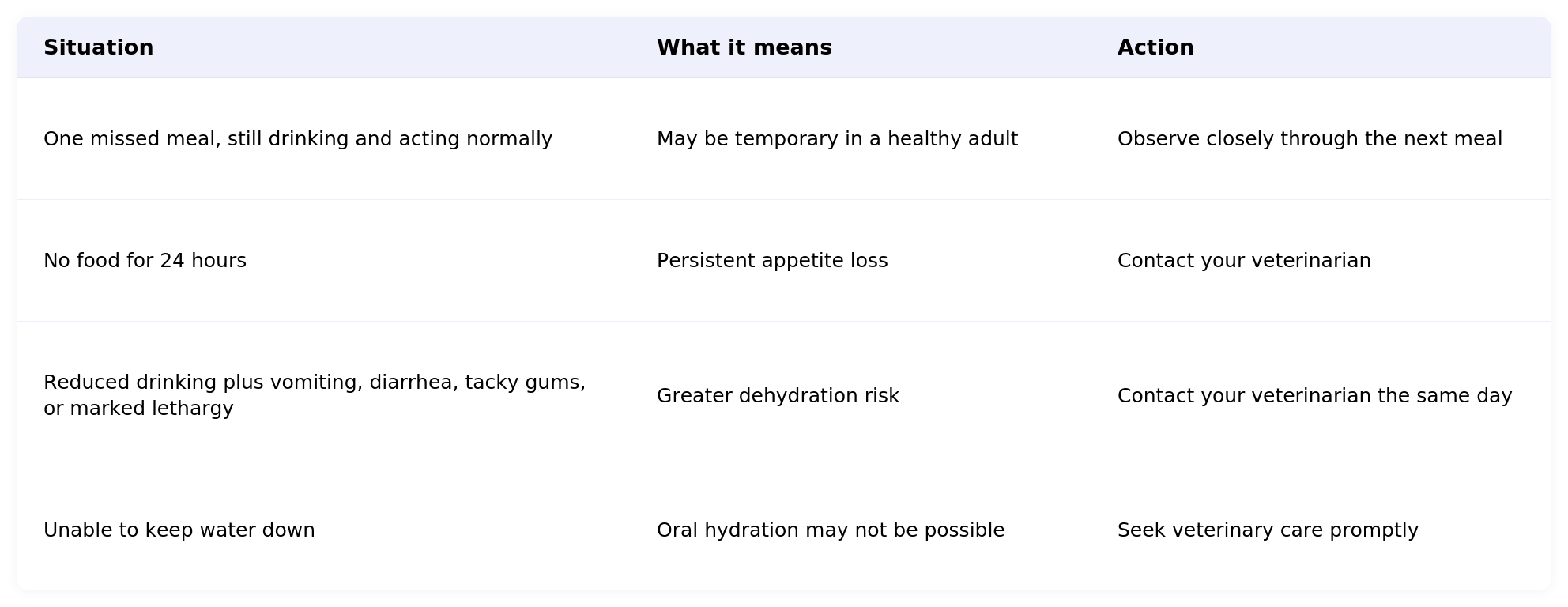
Dry or tacky gums, reduced skin elasticity, sunken eyes, weakness, and lethargy can accompany dehydration. These signs are useful clues, but home checks cannot reliably determine the exact severity of a fluid deficit.
Do not intentionally restrict water because a dog is vomiting or drinking unusually unless a veterinarian gives that instruction for a specific medical reason.
How Long Can a Puppy Go Without Eating?
Very young puppies have minimal fat reserves and limited ability to maintain blood glucose during fasting. Merck notes that neonatal puppies have limited glycogen reserves and metabolic capacity, so even relatively short periods without nourishment can contribute to hypoglycemia.
For orphaned puppies during the first week of life, VCA recommends feeding every 2–4 hours.
For an older, weaned puppy, there is no single number of hours that is safe for every breed. Toy and very small puppies are particularly vulnerable to low blood sugar because of their small glycogen and fat reserves. Weakness, abnormal sleepiness, poor coordination, tremors, seizures, or collapse may occur when blood glucose falls too low.
A practical rule is simple:
- Newborn/orphaned puppy: follow the 2–4-hour feeding schedule during the first week.
- Young or toy-breed puppy: a skipped meal deserves attention rather than waiting for a 12-hour cutoff.
- Puppy refusing food plus vomiting, diarrhea, weakness, or lethargy: contact a veterinarian promptly.
PetMD specifically recommends contacting a veterinarian when a puppy starts skipping meals because puppies cannot tolerate fasting as well as healthy adult dogs.
When Should I Call the Vet?
For a healthy adult dog with no other symptoms, 24 hours without food is the point to call your veterinarian. Do not wait 24 hours when another concerning sign is already present.
Warning Signs to Watch for Right Away
Seek urgent veterinary care for food refusal accompanied by:
- repeated or persistent vomiting
- profuse diarrhea
- inability to keep water down
- collapse or inability to stand
- seizures or marked disorientation
- severe lethargy
- pale, blue, or markedly abnormal gums
- a swollen or painful abdomen
- repeated retching with little or nothing produced
- difficulty breathing
- Suspected toxin ingestion: contact your veterinarian and the ASPCA Animal Poison Control Center at (888) 426-4435 immediately.
- rapid deterioration
PetMD advises emergency assessment when appetite loss occurs with vomiting or diarrhea, marked lethargy, a tense or distended abdomen, or abdominal pain.
A sudden change in appetite may also occur alongside other abnormal behavioral shifts. The combination is more informative than either sign alone.
High-Risk Dogs That Need Earlier Care
Some dogs should not be managed according to the same timeline as a healthy adult.
Puppies have smaller energy reserves and are more vulnerable to hypoglycemia and dehydration.
Senior dogs may have kidney disease, dental pain, cancer, gastrointestinal disease, or another condition affecting appetite. A new decline in food intake deserves investigation rather than being attributed to age.
Dogs with diabetes need particular caution. Food intake affects insulin management, and poor intake can occur with serious complications such as diabetic ketoacidosis. Contact the veterinary team managing the diabetes rather than adjusting insulin or waiting for the appetite to return on its own. See Hoomanely's guide to management of canine diabetes.
Dogs with known kidney, liver, gastrointestinal, or cancer diagnoses also warrant a lower threshold for veterinary contact.
Practical Ways to Get Your Dog Eating and Drinking Again
Home measures should be brief and reserved for an otherwise stable dog with a mild, recent decrease in appetite.
If your dog has reached the 24-hour no-food threshold, refuses water, or has any red flag, move past home troubleshooting and contact your veterinarian.
Home Remedies That Are Safe to Try
For one feeding cycle, an otherwise healthy adult dog may respond to simple changes:
- Warm wet food slightly to increase its aroma.
- Offer a small portion rather than a full meal.
- Try gentle hand-feeding if the dog is calm and interested.
- Add a small amount of plain, onion-free and garlic-free broth to the normal food if your veterinarian has no dietary concerns.
- Feed in a quiet area if a stressful event, travel, or a new environment appears to have affected appetite.
Stress can alter appetite, but it should not become the default explanation for persistent food refusal. If appetite does not return or another symptom appears, look for a medical cause rather than continuing to change foods.
Foods and Fluids You Can Offer Your Dog
Keep fresh water freely available.
If your veterinarian recommends a temporary highly digestible diet, follow their specific instructions. Veterinary gastrointestinal diets are generally preferred because they are formulated for digestive illness. Traditional chicken and rice is nutritionally incomplete and should not become a prolonged feeding plan.
Wet dog food can increase dietary moisture. Water can also be mixed with food when the dog is willing to eat and swallow normally. AAHA recognizes enteral water, including water mixed with food, as one option when oral intake is appropriate.
Do not routinely give human electrolyte drinks. Products vary in sodium, sugar, and sweeteners, and some sugar-free products may contain ingredients that are unsafe for dogs. Use a veterinary electrolyte product only when your veterinarian recommends it.
What Not to Do at Home
Do not:
- force solid food into a dog that refuses to swallow
- syringe large amounts of water or food into a weak or nauseated dog
- give human appetite stimulants or anti-nausea medication
- repeatedly switch foods for several days while the dog continues not to eat
- intentionally withhold drinking water
- postpone veterinary care based on estimates of how long a dog might survive without food
Force-feeding can create food aversion and can be dangerous when swallowing is impaired. Tube feeding, when necessary, requires veterinary placement and instruction.
Veterinary Treatments and Options
The veterinarian's first job is to find out why the dog stopped eating.
A physical examination may be followed by blood work, urinalysis, X-rays, ultrasound, dental assessment, or other testing based on the dog's history and symptoms.
Treatment is directed at the cause. VCA notes that veterinary management can include treatment for dehydration, nausea control, appetite-stimulating medication, correction of electrolyte abnormalities, and nutritional support. If the gastrointestinal tract is functional but the dog cannot eat enough voluntarily, a feeding tube may be used temporarily.
WSAVA's hospital nutrition guidance treats prolonged poor intake as a clinical problem rather than something to simply wait out. Nutritional support becomes increasingly important as anorexia continues, and malnourished patients may need intervention sooner.
What Happens to a Dog's Body Without Food?
When dietary energy stops, the body begins using stored fuel to maintain essential functions.
Stored glycogen supplies readily available glucose first. As fasting continues, the body relies increasingly on stored fat. With prolonged inadequate intake, protein from lean tissue can also be used to meet energy needs. Disease can accelerate this process because inflammation and illness increase catabolism.
Merck notes that anorexia can worsen disease-associated catabolism, while inadequate energy intake eventually contributes to weight loss and skeletal-muscle loss.
The progression is not identical in every dog, so it should not be converted into an hour-by-hour countdown. Observable changes may include:
- reduced energy and activity
- weakness
- progressive weight loss
- loss of muscle
- worsening recovery from illness or injury
- dehydration when water intake is also reduced
- hypoglycemia in susceptible puppies
Water loss changes the situation more quickly. As dehydration worsens, reduced tissue hydration can progress to impaired circulation and, in severe cases, hypovolemic shock.
What an Eating and Drinking Baseline Can Add
A missed meal is easy to remember when you are standing beside the bowl. A gradual decline is harder. One person may assume someone else fed the dog, food may be left behind over several meals, or a multi-pet household may make it difficult to reconstruct exactly when intake changed.
Hoomanely EverBowl™ learns a dog's normal eating and drinking patterns over time. That longitudinal record can provide context about when intake began to change and whether the change persisted relative to the dog's own baseline.
EverBowl does not diagnose the reason a dog stopped eating, determine whether an emergency is occurring, or replace the decision rules above. Its value is the record: giving you and your veterinarian a clearer timeline instead of trying to reconstruct several days from memory.
If a puppy, diabetic dog, senior dog, or any dog with urgent symptoms refuses food or water, act on the clinical signs first. Do not wait for additional pattern data.
Conclusion
Dogs can physiologically tolerate short periods without food, but 24 hours without eating is already a reason to contact your veterinarian.
Water refusal, vomiting, diarrhea, weakness, abdominal pain, or another major change lowers that threshold further. Puppies and dogs with existing medical conditions need earlier assessment. If your dog has simply missed one meal and otherwise seems normal, a brief attempt with familiar, palatable food may be reasonable. If appetite does not return, find out why rather than waiting to see how long the dog can go without eating.
FAQs
1. Can a Dog Survive for a Full Week Without Any Food?
A full week without food should never be used as a home-care target. For a healthy adult dog, contact your veterinarian after 24 hours without food, and call sooner if vomiting, diarrhea, weakness, pain, water refusal, or another concerning sign is present. There is no safe number of days a dog can go without eating because risk depends on the individual dog and the reason appetite has stopped.
2. How Often Should a Newborn Puppy Be Fed if the Mother Is Unavailable?
VCA recommends feeding orphaned puppies every 2–4 hours during the first week of life. After the first week, feeding frequency can generally be reduced to every 4–6 hours until weaning progresses. Follow a commercial puppy milk replacer's instructions and involve a veterinarian if the puppy is weak, cold, refuses to nurse, or is not gaining weight.
3. Why Is Water Refusal More Dangerous Than Food Refusal?
The body can draw energy from stored glycogen and fat when food stops. Water is required continuously for circulation, temperature control, electrolyte balance, digestion, and kidney function. A significant unexplained reduction in drinking should therefore be discussed promptly with a veterinarian rather than waiting for a multi-day cutoff.
4. Can Stress From a New Environment Cause a Dog to Stop Eating?
Yes. Stress, travel, boarding, adoption, and changes in routine can reduce appetite. A dog that remains otherwise normal may begin eating once it settles, but persistent food refusal still warrants veterinary assessment because pain and disease can produce the same outward sign.
5. Can a Puppy Safely Go Eight Hours Without Eating During the Night?
There is no universal eight-hour rule for all puppies. Newborn orphaned puppies need feeding every 2–4 hours during the first week, while older weaned puppies follow a different schedule. Very young and toy-breed puppies are particularly vulnerable to hypoglycemia, so a skipped meal should be taken seriously rather than judged against an eight-hour cutoff.
6. What Is the 3-3-3 Rule for Rescue Dogs Regarding Appetite?
The 3-3-3 rule is an informal framework describing adjustment during roughly the first three days, three weeks, and three months after adoption. It is not a feeding rule or a medical waiting period. Stress during adjustment can reduce appetite, but a rescue dog that stops eating should still be assessed according to its age, health, symptoms, and the same veterinary decision rules used for any other dog.